
Finding the right creators and managing the work can get complicated fast. Businesses may need to search hundreds of profiles, compare portfolios, send briefs, agree on rates, manage revisions, secure usage rights, and arrange payments. For a small marketing team, this can take more time than creating the content itself. Many teams turn to dedicated marketing tools to make this kind of content creation less time-consuming.
That’s where UGC platforms come in handy. Depending on the solution, they help businesses discover creators, organize campaigns, collect existing customer content, manage content rights, and handle parts of the payment process.
In this guide, we’ll explain how UGC platforms work, the main types available, what features to compare, and how pricing works. We’ll also look at popular platforms and explain when hiring UGC creators independently makes more sense.
Key takeaways on UGC creator platforms
- UGC platforms fall into two main types: creator marketplaces (hire people to make new content) and UGC management tools (collect content customers already posted).
- Before you choose a platform, decide whether you need new content, existing content, or both – this decision shapes which features and pricing model make sense.
- Usage rights are the most commonly overlooked factor in UGC platforms. Confirm what you can use, where, and for how long before you pay for content.
- For US businesses, payment processing and tax documentation (W-9/W-8 forms) often matter as much as the creative features.
- Effective social media strategies increasingly depend on high-quality content from real customers, not only on brand-produced posts.
What are UGC platforms?
A UGC (user-generated content) platform helps businesses find, collect, organize, manage, or reuse content created by customers and creators. Depending on the platform, it may cover one part of this process or handle several stages of a UGC campaign. In practice, a user-generated content platform connects a brand with the UGC creators or customers producing content on its behalf. Some businesses simply call this user-generated content (UGC) sourcing, since the goal is the same either way: real customer voices at scale.
For example, UGC platforms may help you:
- find UGC creators who fit your niche and target audience,
- collect photos, videos, reviews, and testimonials customers have already shared,
- organize content in one place,
- request and manage permission to reuse content,
- create and manage creator campaigns,
- review and approve submissions,
- distribute UGC across websites, social media, email, or ads,
- track content and campaign performance,
- connect you directly with UGC content creators who already specialize in your industry.
Sourcing and organizing creators is only half the job – you still need to pay them and stay compliant once the work is done. That’s where Useme comes in: it handles contracts, invoices, and payments for UGC creators you hire directly, so you can focus on the campaign itself.

Creator marketplace vs. UGC management platform
The term “UGC platform” covers several types of solutions. A creator marketplace helps you hire people to produce new content – you typically write a brief, choose creators, agree on deliverables, and receive finished assets. A UGC management platform focuses instead on finding, organizing, moderating, and getting permission to use content that customers or creators have already posted; this works especially well for e-commerce brands and online retailers that already get a steady stream of customer content on social media and want to turn it into UGC galleries on their own site.
Because so much of this content is visual content, from product photos to short-form video content, moderation tools matter just as much as discovery tools. Some UGC platforms combine both approaches with influencer management, analytics, or e-commerce features. Many of these tools now double as social media management tools, letting teams schedule, review, and publish UGC without switching between separate apps.
Decide early which of these you need – new content, existing content, or both – since that choice shapes which platform features and pricing model actually make sense for your business.
💡 If you decide to manage UGC creators as direct contractors instead of going through a marketplace, our guide to remote contractor management for US companies covers the basics of running that relationship well.
Why use a UGC platform?
65% of global shoppers say UGC – ratings, reviews, photos, and videos – influences their buying decisions. Beyond these core benefits, strong UGC platforms can often cover several other marketing needs at once, so brands looking for a comprehensive tool may be able to cut down on separate logins and subscriptions.
- Find creators faster – skip the manual search through TikTok and Instagram.
- Access a wider creator pool – different niches, locations, demographics, content styles.
- Scale content production – use advanced features, like AI-assisted scripts or automated approvals, to speed up campaigns.
- Reduce administrative work – briefs, messaging, approvals, contracts, payments, content organization.
- Get more creative variety – work with multiple creators instead of relying on one person.
- Test content before scaling – produce several creative variations and see what works.
- Simplify rights management – avoid discovering later that you can’t legally use a video in a paid ad.
- Track campaign performance – depending on the platform, you can track content performance, creator performance, engagement, conversions, and ad performance.
How to choose the right UGC platform for your marketing strategy
The best UGC platform isn’t necessarily the one with the largest creator network or the longest feature list. It’s the one that fits your campaign goals, workflow, budget, and legal requirements. Work through the steps below to compare your options.
Step 1: Define your goal
Start with the outcome you want from UGC platforms. Different tools serve different use cases. You may be looking for:
- ad creative for TikTok, Instagram, YouTube, or paid social campaigns,
- product photography for e-commerce stores and product pages,
- reviews and testimonials to build trust and social proof,
- customer content you can repost or display on your website,
- influencer partnerships with creators who can publish content to their own audiences,
- existing UGC collection from customers who are already posting about your brand.
Step 2: Decide whether you need creators or content collection
Creator marketplaces help you find people who can produce new content for your brand. Many marketing agencies rely on this model when they need to leverage UGC for a client without hiring a full in-house content team. UGC management and collection platforms instead focus on finding, organizing, moderating, and displaying content that customers or creators have already produced.
Some UGC platforms combine both approaches. Decide which workflow you need before you compare providers, or you may end up paying for features your team rarely uses.
💡 If you’re weighing a dedicated UGC platform against broader freelance and gig options, our comparison of gig economy platforms can help you see where each type fits.
Step 3: Determine your campaign volume
Think beyond your first campaign. A platform that works well for five videos may become inefficient once you need 50 or 100 assets a month.
Consider:
- how many creators you expect to work with,
- how many assets you need per campaign,
- how often you’ll run campaigns,
- whether multiple team members need access,
- whether you manage one brand or several,
- whether you need to run campaigns across multiple markets.
If you plan to scale, prioritize platforms with campaign management, creator communication, asset organization, approvals, and reporting built into the same workflow. Brands seeking to scale UGC production often need to coordinate work across multiple channels and multiple platforms at the same time, so this kind of built-in structure matters early on.
Step 4: Check creator discovery and vetting
A large creator database isn’t useful if you can’t find people who match your requirements, and the right creator isn’t simply the person with the biggest audience.
Check whether you can filter creators by:
- location and language,
- niche or industry,
- content style and format,
- audience demographics,
- experience level and production capabilities,
- price range.
For paid UGC, creator-audience size matters less than the creator’s ability to make convincing content that fits your target customer – for influencer campaigns, audience quality and reach matter much more. It’s also worth checking how the platform vets creators: portfolios, ratings, previous campaigns, and identity verification all help you assess quality before you commit.
💡 If a UGC platform’s own pool feels too limited, our comparison of online job boards covers additional places to source talent.
Step 5: Confirm usage rights and licensing
This is one of the most important factors to check before you hire a UGC creator, and it’s easy to overlook – but it’s one of the costliest mistakes to fix after the fact.
Never assume that paying for UGC gives you unlimited rights to use it everywhere. Before you choose a platform, find out:
- who owns the finished content,
- where you can publish it and for how long,
- which countries the rights cover,
- whether paid advertising and exclusivity are included,
- whether raw footage is included,
- whether you can edit or repurpose the content,
- how usage rights are documented.
A video that looks affordable at first can get much more expensive if you have to buy the rights you need separately. If you want to turn a creator’s TikTok video into a paid ad, the agreement should explicitly cover that use – agree on it in writing before filming starts.
Step 6: Compare payment, fees, and compliance support
Creator compensation and admin support are areas where UGC platforms differ a lot.
Check:
- how creators are paid, in which currencies, and through which methods,
- whether the platform handles payments and international transfers for you,
- when creators receive their money,
- whether the platform charges a transaction fee,
- contract, invoice, and tax documentation support (including W-9 or W-8 forms for US businesses working with multiple creators).
💡 If you end up paying several creators directly instead of through UGC platforms, our guide to consolidated invoicing explains how to group those payments into one bill instead of managing them one by one.
Step 7: Check ease of use, integrations, and security
A platform should simplify your workflow, not add another system for your team to learn. Test a free trial or demo before you commit, and pay attention to how many steps it takes to complete a typical task – a confusing dashboard can slow down every stage, from briefing creators to approving final assets.
Also check:
- whether integrations with tools like Shopify, WooCommerce, Meta Ads, or your email platform are native or require a third-party connection (this matters most for e-commerce platforms, where a broken integration can mean UGC never reaches the product page),
- how the platform organizes content by creator, campaign, product, and usage rights, so a growing content library stays easy to search,
- data protection practices, access controls, and backup procedures,
- the quality and responsiveness of customer support.
Step 8: Check analytics and reporting
Reporting features help you decide which content and creators are worth investing in again. Depending on the platform, you may be able to track engagement, reach, content and creator performance, conversions, and ad performance.
Choose metrics that match your goal – if you’re producing UGC for paid ads, engagement alone won’t tell you whether the content works. Pay attention to metrics tied to your specific target audience, rather than platform-wide averages that can hide weak performance in your core segment.
Step 9: Set your budget
Your UGC budget covers more than the creator’s fee – platform subscriptions, transaction fees, campaign management costs, editing fees, and extended usage rights can all add up.
A cheaper platform can end up costing more if it charges separately for creator payments, additional users, or content rights. A pricier platform can be worth it if it removes several manual tasks from your team’s workload. Calculate the total cost based on your expected campaign volume, not someone else’s.
Step 10: Test the platform with a small campaign
A demo shows you what a platform can do. A real campaign shows you whether it works for your team.
Start with a small project and evaluate how quickly you can find suitable creators, how easy it is to create a brief, how communication and approvals work, how payments are processed, and how responsive customer support is. This trial can expose workflow problems before you commit to a larger subscription or campaign.
Step 11: Measure results before scaling
Once your first campaign wraps up, look at what the UGC actually achieved – engagement rate, click-through rate, conversion rate, cost per acquisition, return on ad spend, and content reuse rate are all worth tracking depending on your goal.
Also evaluate the creators themselves. Which delivered the strongest content? Which formats and hooks performed best? Reviewing this after every campaign is what separates a one-off test from a repeatable strategy – use those insights to improve your next campaign, instead of simply increasing your budget.
Search engines can favor sites that publish fresh, relevant content on certain types of pages, though the effect varies by content type and query. Because search engines favor pages that stay current, a steady stream of new UGC can support your site’s rankings long after a single campaign ends. A platform that makes it easy to keep publishing fresh UGC may support your SEO performance over time, too – one more reason a steady content pipeline pays off beyond the campaign itself.
Best UGC platforms for businesses
The right UGC platform depends on what you want to accomplish. Some tools focus on finding and hiring creators. Others center on collecting customer reviews, curating social media content, managing rights, or turning UGC into advertising assets. Below is a closer look at some widely used UGC platforms on the market, along with the key features that set each one apart, so you can see which platform caters best to your goals.
Quick comparison of key features: UGC platforms by use case
| Platform | Best for | Main strength |
| Influee | Scalable creator campaigns | Creator marketplace + content production |
| Billo | Video UGC | US creator network + simple video production |
| Useme | Payments and compliance for direct hires | Contracting, global payments, and invoicing for UGC creators |
| Trend | Premium UGC | Professional photos and videos |
| Insense | Paid social UGC and influencer | Campaign management |
| JoinBrands | SMBs | Accessible creator marketplace |
| Yotpo | E-commerce | Reviews + visual UGC + social proof |
| Bazaarvoice | Enterprise | Reviews, UGC, and retail syndication |
| Hummingbirds | Local businesses | Hyperlocal creator discovery |
| Flowbox | Enterprise brands | UGC collection, moderation, and distribution |
| Archive | Instagram UGC | Content discovery and asset management |
1. Influee
Best for: brands that want to source UGC from a large creator network and manage content production in one place.
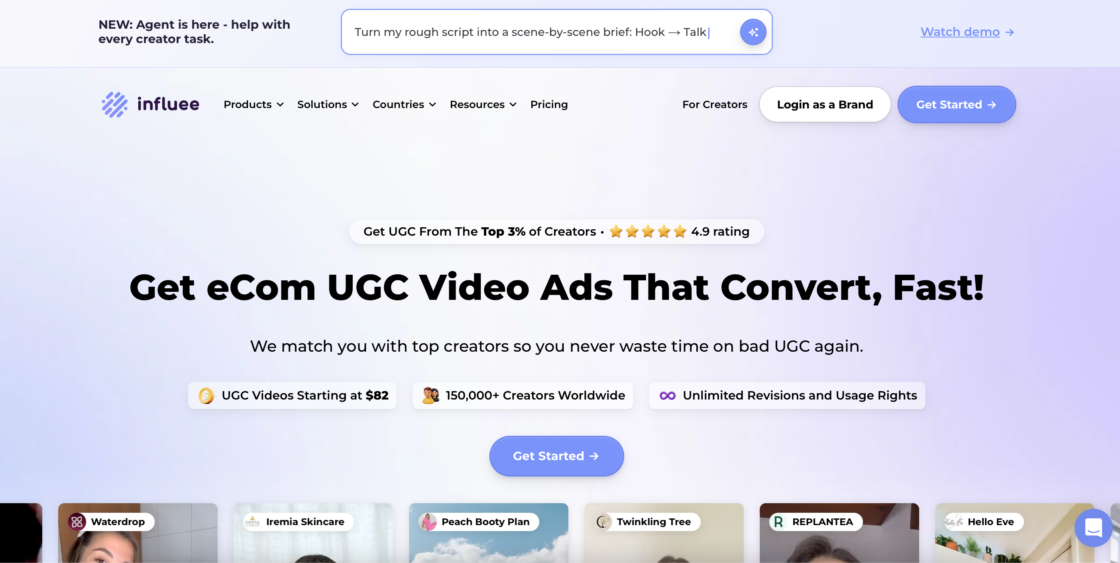
Influee runs a global marketplace where brands brief creators directly and manage scripts, revisions, and delivery for an entire campaign inside one dashboard.
Key info & features:
- a creator marketplace spanning 23 countries, so you can source content in different markets and languages,
- AI-assisted script writing and video editing tools that speed up post-production,
- unlimited revisions until you approve the final content,
- content usage rights included with every delivered asset,
- direct in-platform messaging to negotiate deliverables and pricing with creators,
- monthly subscription plans plus a marketplace fee charged on creator payments.
2. Billo
Best for: US businesses that mainly need affordable short-form video UGC.
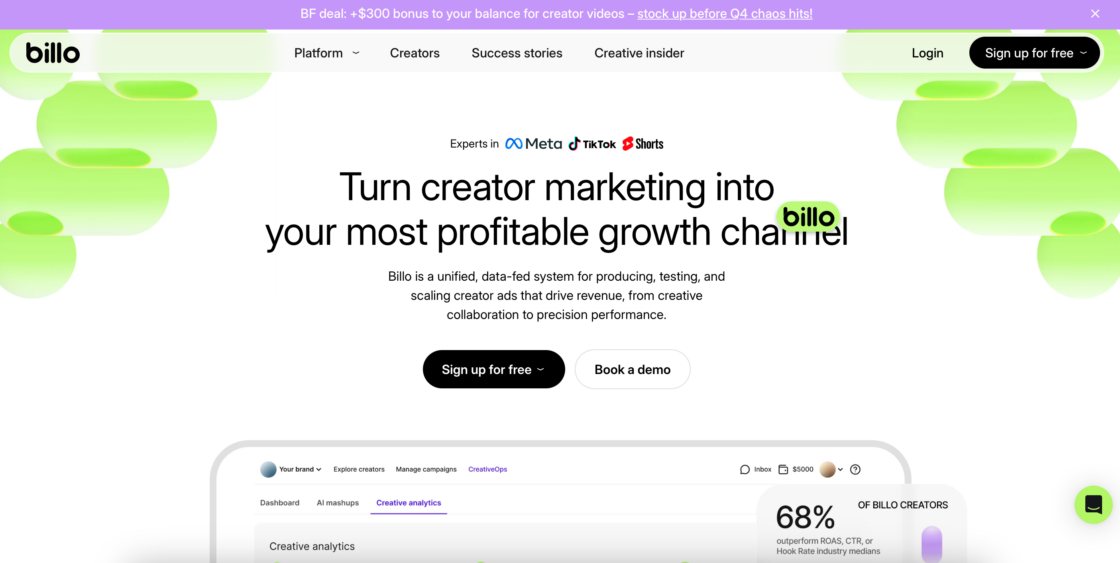
Billo positions itself as a fast, affordable option for US brands that want short-form video UGC without a lengthy setup process.
Key info & features:
- an open marketplace where creators apply to your public brief, so you review applicants before you commit,
- a creator pool based in the US, Canada, UK, and Australia,
- pay-per-video or credit-package pricing, with no required monthly subscription,
- charges only apply once you approve a creator for a project,
- AI-generated brief suggestions and performance scoring drawn from a large ad dataset,
- usage rights included with delivered videos.
3. Useme
Best for: businesses that want to hire UGC creators directly and handle payments, contracts, and compliance without the manual admin.
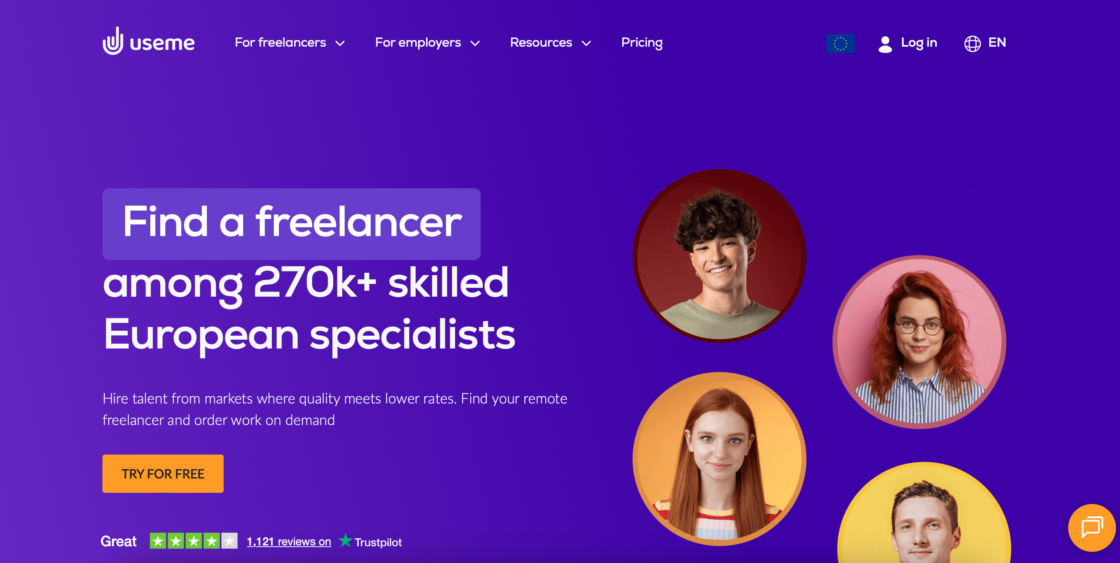
Useme isn’t a typical UGC platform – it doesn’t collect UGC or maintain a database of creators. But for the payment and compliance side of working with UGC creators, it’s a strong option, which is why it earns a spot in this ranking.
Key info & features:
- contracting and freelancer communication handled for you, with no paperwork to sign or manage yourself,
- one standardized compliance process regardless of the freelancer’s country, service type, or currency,
- freelancers from around 170 countries,
- international payments made through a form and an emailed payment link, the same process wherever the freelancer is based,
- payment in USD, EUR, GBP, or PLN by bank transfer or card, including Google Pay and Apple Pay, with payouts typically arriving in 1–3 business days,
- freelancer identity verification and sanctions/AML screening,
- all contracts, files, and invoices stored in one place, with deadline tracking across multiple freelancers,
- consolidated invoicing, so you can group several freelancer payments into one monthly invoice,
- professional, EU-compliant invoices in English,
- transparent pricing: no sign-up or account fees, and a capped service fee charged only when a deal completes.
4. Trend
Best for: brands that want professionally produced UGC-style photos and videos.
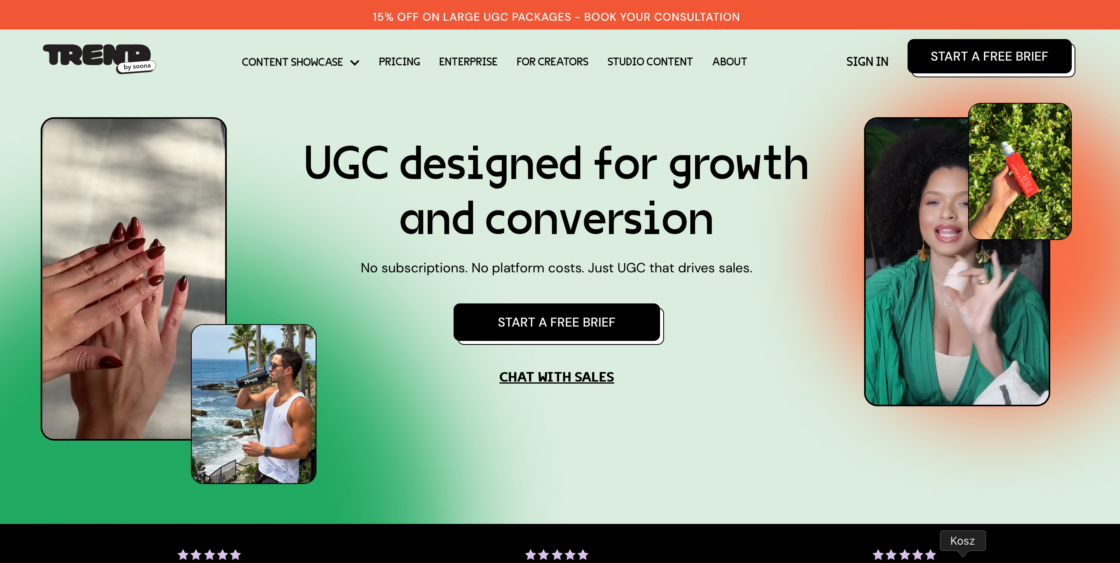
Trend is a solid pick when you need visually appealing, polished assets rather than a raw, phone-shot look.
Key info & features:
- a vetted marketplace of photographers and videographers, with free briefs to describe what you need,
- fixed, transparent credit-package pricing instead of a monthly subscription,
- usage rights included in perpetuity for approved content,
- polished, professionally produced photos and videos rather than a raw, phone-shot look,
- creator selection and campaign tracking handled inside the platform.
5. Insense
Best for: brands running UGC and influencer campaigns with a strong paid-social focus.

Insense combines UGC campaign tools with creator-led paid social features in one dashboard, which is why it’s sometimes categorized as an influencer marketing platform. Many creative agencies rely on tools like this when they manage UGC on behalf of several client brands at once.
Covers:
- a creator marketplace with filters for category, location, age, and audience interests,
- native whitelisting for Meta and TikTok Spark Ads, so approved ads can run from a creator’s own handle,
- in-app messaging for briefs, negotiation, and content approvals,
- organic posting options alongside paid UGC production,
- creator contracts, rights management, and payments handled inside the platform,
- tiered monthly or quarterly subscriptions, with creator payments and a marketplace fee charged separately.
6. JoinBrands
Best for: small and midsize businesses that want accessible UGC creation at scale.
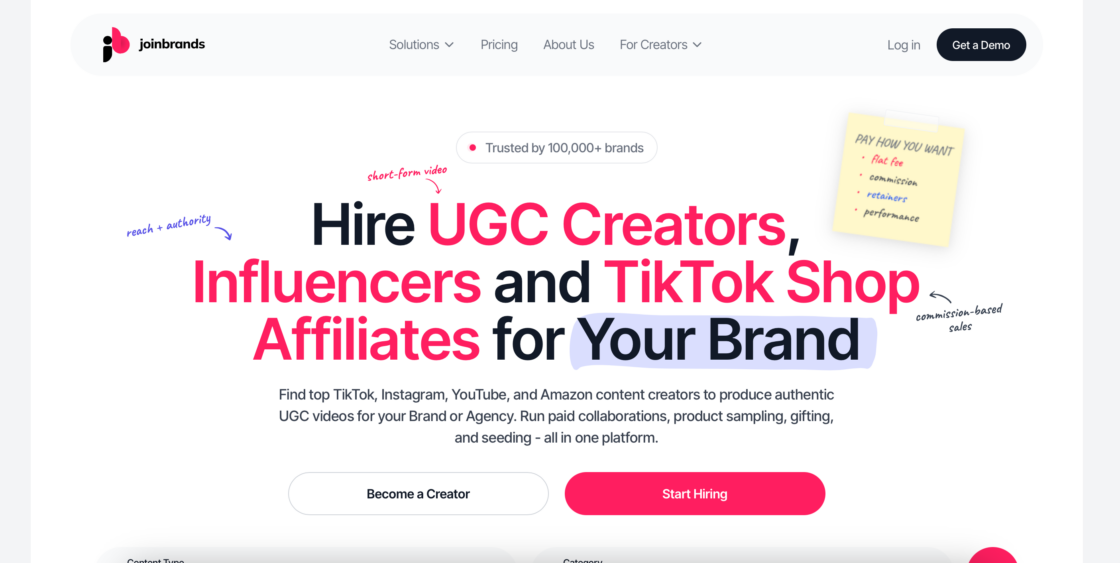
JoinBrands enables brands with smaller budgets to encourage customers and creators to submit content, allowing brands to test several concepts before committing to a bigger campaign.
Key info & features:
- a large creator and affiliate marketplace with in-app chat once a creator accepts your job,
- free and paid subscription tiers, with the platform fee on creator payments dropping at higher tiers,
- an optional product-reimbursement setup, so creators buy the product themselves and get repaid with their fee,
- applicant filtering by past ratings, views, and sales generated,
- content types spanning images, video, social posting, and local activations,
- monthly rollover credit on paid plans, applied automatically toward creator payments.
7. Yotpo
Best for: e-commerce businesses that want to combine reviews, customer content, and social proof.
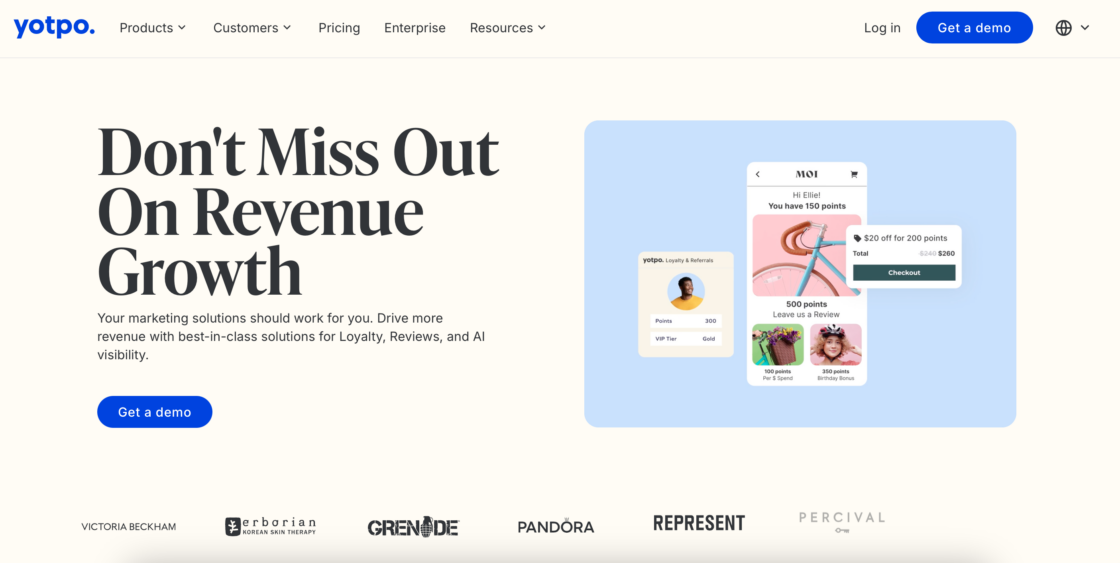
Yotpo centers on collecting and displaying customer reviews, photos, and videos directly on product pages, then extends that content to social and paid channels.
Key info & features:
- automated review requests by email or SMS after purchase, with photo and video uploads included,
- AI-powered on-site widgets, including smart sorting, smart filters, and review highlights,
- a built-in Q&A section customers and your team can both answer,
- star-rating syndication to Google Search and Google Shopping,
- multilingual review collection and display for brands selling in several markets,
- integrations with loyalty, SMS, and subscription tools from the same provider.
8. Bazaarvoice
Best for: large retailers and enterprise brands managing UGC across multiple shopping channels.
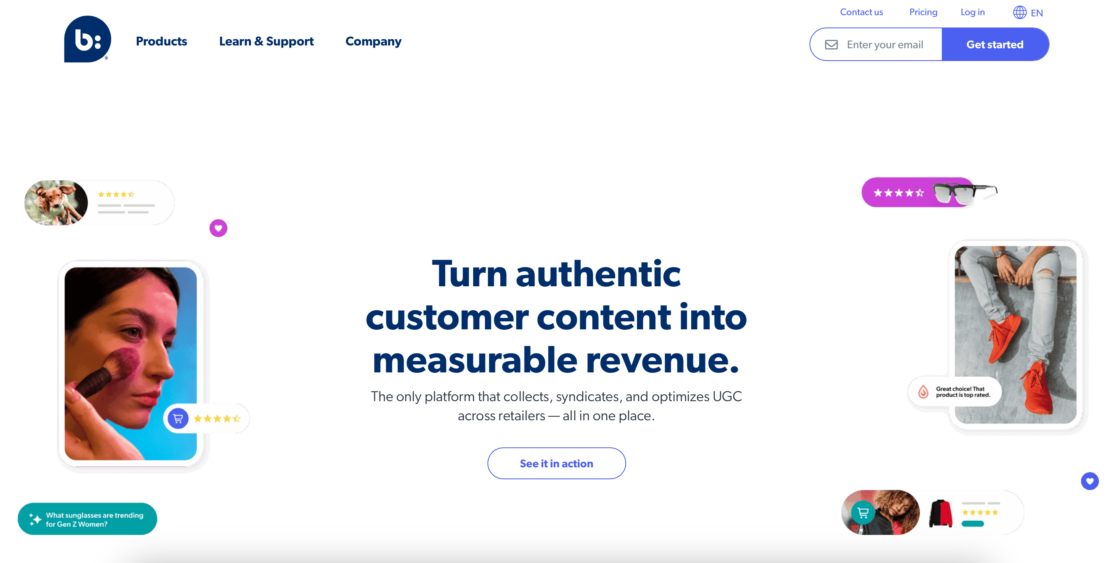
Bazaarvoice is built for enterprise brands and retailers that need to run UGC and reviews across multiple shopping channels at once. Its core toolset centers on product reviews and Q&A.
Key info & features:
- large-scale review syndication to thousands of retailer sites, so one review reaches every place a product sells,
- ratings, reviews, Q&A, and visual UGC collected directly on your own site,
- product sampling programs to build up review volume on new or under-reviewed items,
- AI-assisted matching of syndicated content to the right products on retailer pages,
- moderation tools built for high submission volumes,
- enterprise-level analytics on review and UGC performance across the retail network.
9. Hummingbirds
Best for: local and location-based businesses that want to work with creators in specific communities.
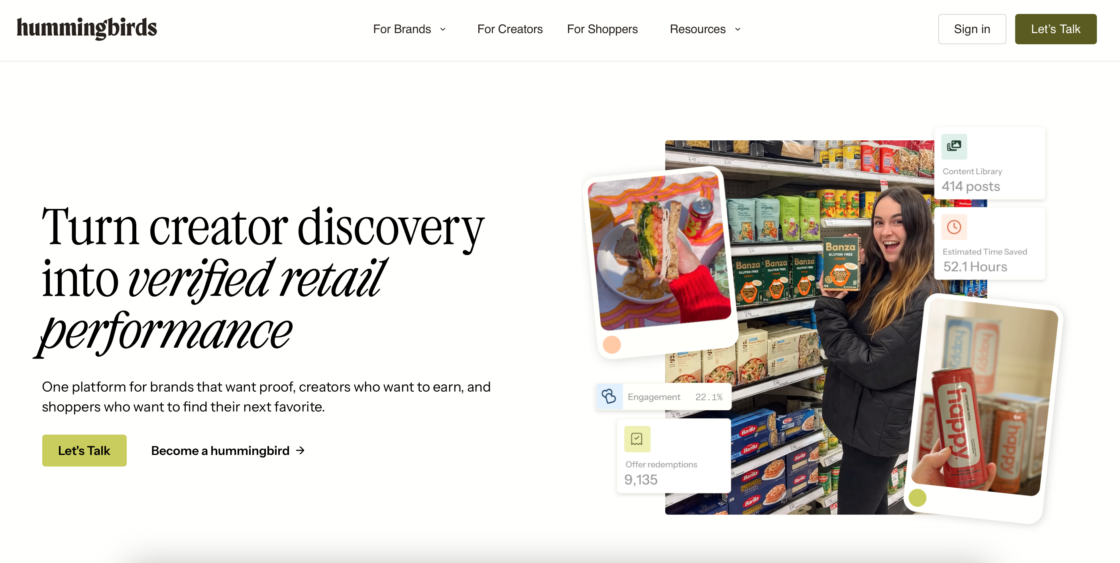
Hummingbirds focuses on connecting brands with local creators for in-person, community-based content instead of large-scale national campaigns.
Covers:
- a creator network built around specific US cities, prioritizing local relevance over follower count,
- campaign briefs defined by retailer, city, timing, and deliverables,
- creators you handpick yourself or the Hummingbirds team matches for you,
- verified in-store purchase tracking through shareable Offers tied to specific products,
- rights-cleared content you can reuse across paid, owned, and retail channels,
- dashboards that combine content results with verified purchase data.
10. Flowbox
Best for: larger brands that need sophisticated UGC collection, moderation, and distribution.
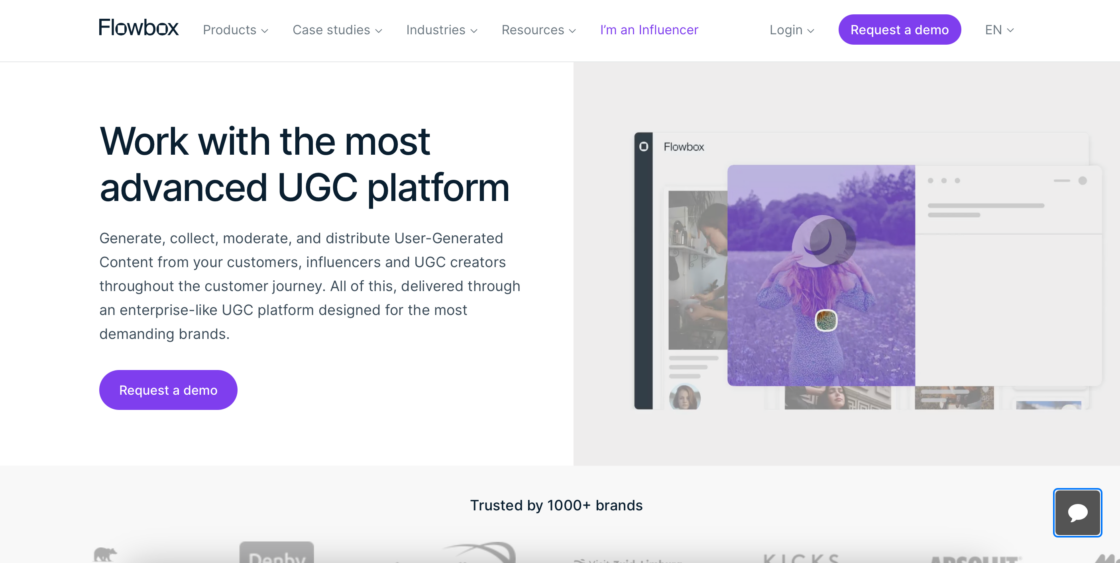
Flowbox pulls user content from multiple social channels into one library, then adds moderation and rights management before it reaches your site or ads.
Key info & features:
- automatic collection of tagged content from Instagram, TikTok, Facebook, Pinterest, and YouTube,
- moderation with whitelists, blacklists, and tags for fast approvals,
- built-in rights requests, so you secure permission before reusing a post,
- multi-product linking, connecting one piece of content to several catalog items,
- shoppable galleries and widgets for product and category pages,
- analytics on how on-site UGC performs.
11. Archive
Best for: brands that mainly need to collect, organize, and reuse Instagram UGC.
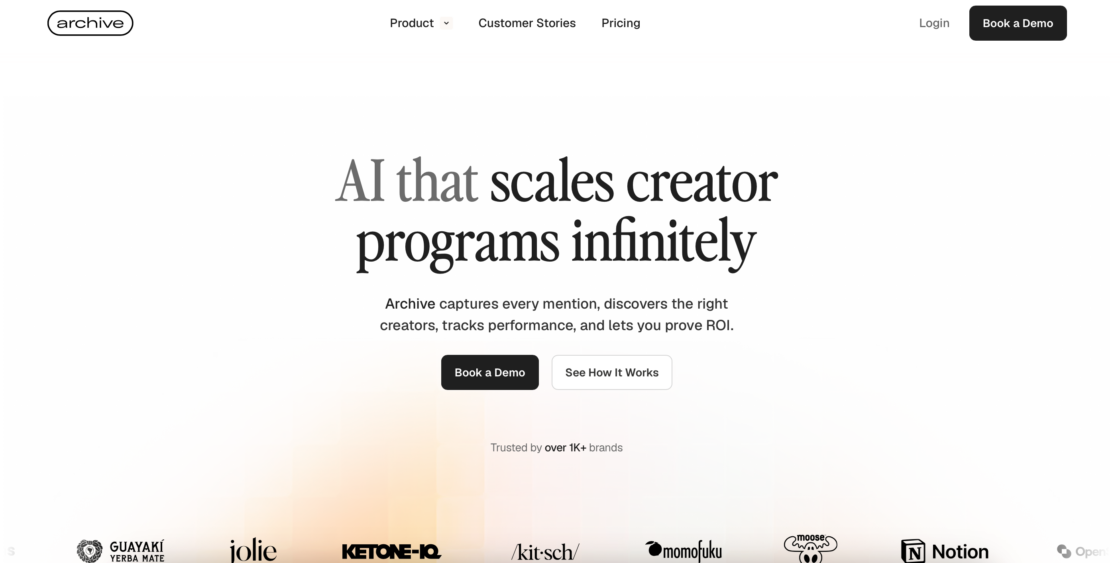
Archive specializes in discovering and organizing Instagram content tied to your brand, so you can secure permissions and reuse it without manually tracking down posts.
Key info & features:
- automatic detection of tagged Instagram and TikTok content, including Stories before they disappear,
- AI detection of untagged posts where your brand or product still appears,
- creator search across a large database, including creators already working with competitors,
- campaign dashboards with live tracking of captured content and performance,
- shoppable UGC feeds that turn top creator content into on-site social proof,
- support for creator gifting and vetting alongside content capture.
Together, these eleven options illustrate the range of what UGC platforms can offer, from creator marketplaces to content collection, rights management, and the payment and compliance side of hiring creators directly.
Running a UGC campaign, step by step
Choosing a good platform is only the first part of the process. Once you’ve picked one, here’s how a typical campaign runs from brief to published asset – and how to get better results along the way.
Write a clear brief
The platform may let you publish a brief describing the project. A strong brief gives creators enough information to understand what you need, without dictating every detail – include the campaign objective, target audience, key product information, deliverables, deadlines, mandatory talking points, visual requirements, and usage rights. Some platforms also offer templates or AI-assisted tools to help you prepare briefs.
Find and select creators, then agree on terms
Search the platform’s creator database or use its recommendations, filtering by the criteria you defined earlier (see Step 4 above). Review portfolios and previous work before you decide who to contact.
Once you find a suitable creator, agree on deliverables, payment, timeline, number of revisions, content specifications, usage rights, and exclusivity if it applies – before work starts.
Give creators room to be creative
UGC works because it feels different from traditional brand advertising. If you control every movement, sentence, and camera angle, the result can lose that natural quality. Give creators clear boundaries, but let them decide how to present the product in a way that feels natural to their audience and personal style.
Reference videos can help communicate your expectations – use them as creative direction, not templates. Asking several creators to reproduce the same video can lead to repetitive content and make the campaign feel less authentic.
Define deliverables precisely
Be specific about what you expect: number of videos or photos, required length or dimensions, which platforms the content is for, whether you need raw footage or captions, required hooks or product mentions, file formats, and delivery method. Clear requirements reduce unnecessary revisions and make it easier to compare creator submissions.
Set realistic deadlines and agree on revisions upfront
Give creators enough time to receive products, plan their content, film, edit, and make revisions. If you have a fixed launch date, work backward from it, and allow extra time for shipping and approvals instead of setting the creator deadline right before publication.
Decide how many revision rounds you’ll include before production starts. This protects both sides: brands know what they can request, and creators know what’s expected of them and when extra work may need extra payment.
Production, review, and payment
The creator produces the agreed content and usually submits finished files through the platform, though some platforms use external tools for delivery. Check whether the submission meets the original brief, and request the agreed revisions if something’s missing.
After you approve the content, the platform may facilitate payment, or leave payment arrangements to you and the creator directly – this varies a lot by provider. Don’t leave licensing discussions until after the creator finishes the content; agree in advance on where and how you can use the assets, especially if you plan to run the content as paid advertising.
Use, measure, and repurpose the content
Once you have the final assets and the right usage rights, put them to work – social media posts, paid social ads, product pages, landing pages, email campaigns, online stores, and video ads are all common channels. Analytics can help you compare creators, content, and campaigns to see which types of UGC deserve more investment.
A strong asset can live much longer than a single social post. Depending on your usage rights, repurpose your best-performing content for retargeting campaigns, sales materials, or a future refresh – this is one of the simplest ways to get more value from your UGC efforts without commissioning new creator content every time.
Build a diverse, long-term creator team
Avoid relying on a single creator or repeating the same type of content. Build a group with different backgrounds, locations, ages, interests, content styles, and customer perspectives, so your content speaks to different segments of your audience.
When a creator consistently delivers useful content, consider working with them again. They already understand your product, audience, and expectations, which makes future projects faster – and gives you a reliable pool of people to turn to when you need fresh content.
💡 Repeat work also benefits the creator’s side of the relationship. Our guide to freelance brand scaling looks at how independent creators turn one-off gigs into a steady, growing client base.
Test multiple hooks and formats
One UGC video rarely tells you everything you need to know about what works. Test different approaches – problem-solution videos, product demonstrations, testimonials, unboxings, tutorials, before-and-after content, reviews, and story-driven videos – along with different opening lines, visuals, lengths, and calls to action. Use performance data to see which combinations are worth producing again.
Conclusion on UGC platforms
UGC platforms can make it much easier for businesses to find creators, collect customer content, manage campaigns, and turn authentic content into marketing assets. But the right platform depends on what you want to achieve.
With the right platform and workflow in place, UGC can become a scalable part of your content strategy, rather than a one-off campaign tactic. If you want a comprehensive solution that covers both creator content and the contractor side of things, pairing a UGC platform with the right marketing efforts and payment tools is often what makes a UGC strategy sustainable long-term.
Ready to work with independent creators without the paperwork? Useme manages contracts, invoices, and payments for freelancers and contractors in one place.

FAQ on UGC platforms
What are UGC platforms?
UGC platforms are tools that help businesses find, collect, organize, or manage content made by customers and creators – either by connecting you with creators to hire, or by collecting content customers have already posted.
What’s the difference between UGC platforms and influencer marketing platforms?
When you hire a UGC creator, you’re usually paying for the content they produce. The creator doesn’t need a large following, because the main value is the finished video, photo, testimonial, or other asset. Your business can then use that content on its own marketing channels, subject to the agreed usage rights.
With influencer marketing, you’re often also paying for the creator’s audience on social media platforms. The campaign may involve publishing sponsored content to the influencer’s followers, alongside any content the creator produces for the brand. Influencer platforms often price campaigns around reach and audience size, while UGC creator platforms more commonly price around deliverables – though pricing models vary by provider.
The distinction matters when you choose a platform. If your goal is a library of videos for paid social ads, look at a creator marketplace. If customers are already posting photos and reviews about your products, a UGC collection platform may serve you better. In short, a UGC platform isn’t necessarily a place to find influencers.
Who owns the rights to UGC content?
It depends on your agreement. Paying a creator doesn’t automatically give you unlimited rights to use the content everywhere – confirm what channels, countries, and time period the rights cover before you pay.
Can I use UGC in paid ads?
Only if your usage rights agreement explicitly covers paid advertising. Some creator agreements only cover organic social media unless you negotiate broader rights.
Do I need a platform, or can I hire UGC creators directly?
Both work. UGC platforms speed up discovery and often handle messaging and payments. Hiring directly gives you more flexibility and can cost less, but you handle contracts, payments, and tax documentation yourself – unless you use a tool like Useme to manage that part for you.
How do I pay international UGC creators?
Check whether your platform supports multiple currencies and international payment methods. If you hire creators independently, you’ll need to handle currency conversion, payment methods, and any required tax forms yourself.
This article was created with the assistance of AI technology.
| Author: Ela Binkowska |