

The gig economy covers a wide range of work arrangements. It includes a software developer building websites for international clients, a graphic designer creating logos for small businesses, an Uber driver giving rides across town, and a courier delivering food during the evening rush. While these gig jobs may look very different, they all share one thing in common: workers take on individual projects or assignments instead of holding a traditional full-time role.
In this guide, we’ll focus mainly on online platforms for freelancers and independent professionals. You’ll learn how these platforms work, how to choose one that matches your skills and career goals, and which marketplaces suit different types of remote work. We’ll also briefly cover other popular gig platforms to show how they fit into the broader gig economy ecosystem.
Key takeaways on gig economy platforms
- Gig economy platforms function as intermediaries between workers and consumers.
- Gig workers usually don’t get standard employee benefits, so budget for your own taxes and health coverage.
- The right platform depends on your profession, how you want to work, and where your clients are, not on which marketplace is most popular.
- The gig economy extends well beyond online freelancing, covering jobs like food delivery, grocery delivery, warehouse work, and pet care.
- Working across multiple gig economy platforms can protect your income if one marketplace changes its fees or algorithm.
- Avoiding common mistakes, like underpricing your work or skipping contract details, matters as much as choosing the right platform.
What is the gig economy?
The gig economy is a labor market built around short-term work instead of permanent employment. Rather than working for one employer, people take on individual projects, assignments, or services for different clients. They may work full-time as independent professionals or use gig work to earn extra income alongside another job.
Recent labor data shows how big this shift has become. According to an analysis of ADP’s payroll data covering roughly 24 million U.S. workers, short-term W-2 employees made up 21.8% of everyone paid at some point during 2024, and 1099 contractors added another 2.5%, putting the combined gig workforce at roughly one in four workers.
The benefits of gig jobs
Many gig economy apps let workers pick up short-term shifts or one-off gig jobs whenever they want, which many workers cite as a main draw of this kind of work. Instead of committing to a single employer, workers can log into a gig app, browse open jobs, and choose the ones that fit their own schedule.
Gig economy platforms let you manage your work hours and income flexibly, and gig work more broadly offers flexibility in scheduling along with a wide variety of job types.
Who are gig workers?
A gig worker is anyone who earns income by completing individual jobs or projects instead of working in a traditional long-term employment relationship. Some people rely on gig work as their primary source of income, while others use it to supplement their earnings.
It’s worth noting that workers in the gig economy typically lack standard employment protections. Gig workers generally handle their own taxes and don’t get the employee benefits that come with traditional jobs, such as employer-sponsored health insurance or paid leave.
In the U.S., gig workers are generally treated as independent contractors rather than employees under most current state and federal rules. This affects rights like unemployment insurance access, and specifics vary by state.
📌 Want to learn more about the perks of gig workers? Check out our article on 1099 benefits for independent contractors: what you need to know
Common types of gig workers include:
- Freelancers, who provide professional services such as writing, design, programming, or marketing.
- Independent contractors, who complete work for businesses under contract while remaining self-employed.
- Consultants, who advise organizations based on their expertise.
Types of gig economy platforms
Not all gig platforms serve the same purpose. Most fall into one of the following categories:
- Online marketplaces connect businesses with professionals who provide digital services such as software development, graphic design, writing, translation, accounting, or marketing.
- Consulting and expert networks help experienced specialists find high-value advisory or project-based work.
- Creative marketplaces focus on designers, artists, photographers, and other creative professionals.
- Microtask platforms offer small online assignments such as data labeling, transcription, content moderation, surveys, or AI training tasks.
Each category works differently, so the right platform depends on your skills, career goals, and the type of work you want to do. In the following sections, we’ll focus mainly on platforms for online freelance work, while also showing how they fit into the wider gig economy.
For a broader look at how these categories break down by company, Wikipedia’s list of gig economy companies covers everything from home rentals to healthcare and legal services.
Other types of gig economy jobs
Online freelance work is only one corner of the gig economy. A large share of gig economy jobs happen offline, and they’ve become a popular way for independent workers to earn extra cash on a flexible schedule.
- Food delivery is one of the biggest categories. Apps like Uber Eats partner with local restaurants and pay independent workers per same-day delivery. Uber connects drivers with riders too, and most drivers use their own vehicles so they can work whenever they choose.
- Grocery delivery works similarly. An online grocery delivery service typically relies on in-store shoppers who pick and pack consumer products before handing them off to a delivery service for drop-off.
- Warehouse work is another growing category. Amazon Flex, for example, lets independent workers pick up shifts and deliver packages using their own cars, often with no prior experience required.
- Home services make up a large slice of the gig economy too. Platforms in this space connect people with local professionals for jobs like furniture assembly, home repairs, and even renting out spare parking spaces.
- Pet care is one of the fastest-growing gig categories. Pet sitting and dog walking are popular entry points, and pet sitters and dog walkers can set their own rates and pick up jobs around a flexible schedule, using an app whose platform matches them with nearby pet owners.
Like online freelance work, these on-demand work opportunities let independent workers choose flexible work hours. Pay rates vary, but shift work in delivery and warehouse roles can offer higher pay during busy periods, and several platforms are expanding into markets across South America and Latin America.
How to choose the right gig economy platform
No single platform works for every freelancer. The right choice depends on your profession, how you want to work, where your clients are, and how you want to get paid.
Profession
Some platforms welcome most industries. Others focus on specific skills.
Software developers, designers, writers, marketers, translators, and virtual assistants can usually pick from several general marketplaces. Consultants, engineers, legal professionals, and creative specialists may find more opportunities on niche platforms built for their field.
Type of work
Some gig economy platforms suit quick, one-time tasks. Others work better for long-term collaborations.
Pricing models vary too:
- fixed-price projects with a defined scope;
- hourly contracts for ongoing work;
- milestone-based projects, paid as work progresses;
- retainer agreements for recurring monthly work.
Client location
Some platforms serve local businesses or specific countries. Others, like Useme, connect freelancers with clients worldwide. If you want international clients, look for support for cross-border payments, multiple currencies, and global hiring.
With Useme, freelancers can withdraw via PayPal, Wise, or bank transfer. Payments and payouts can be made in different currencies.
Payment protection
Before you join a platform, check:
- how payments are processed,
- when funds are released,
- which payment methods are available,
- whether payment protection is included,
- and how disputes are resolved.
Escrow payments, milestone releases, and verified payment methods all reduce the risk of unpaid invoices. A few platforms and states now offer limited benefits, like portable benefits funds, though this still isn’t the norm.
Fees
Fee structures vary – some charge freelancers, some charge clients, some combine both. Compare these before committing, since they directly affect your take-home pay. A lower commission isn’t always the better deal if another platform brings higher-quality clients.
For example, with Useme, there are no sign-up or account fees. The platform charges a fee only once a deal is completed, with a monthly cap, and only one side pays.
Competition and visibility
If you’re starting out, look for gig economy platforms that make it easy to build a reputation: detailed profiles, portfolios, verified skills, and reviews. Over time, a strong profile and consistent feedback matter more than competing on price.
Best freelance platforms for online work
General freelance marketplaces
These gig economy platforms welcome professionals from a wide range of industries and work well for both new and experienced freelancers. Most let you build a profile, showcase your portfolio, and connect with clients looking for project-based work. Flexibility levels differ across gig platforms and jobs, and many gig platforms use algorithms to match workers with tasks based on skills.
These general marketplaces are some of the best gig work apps for remote freelance projects. They list job posts across dozens of professional services and creative services categories. All you need is a laptop and an internet connection.
Useme
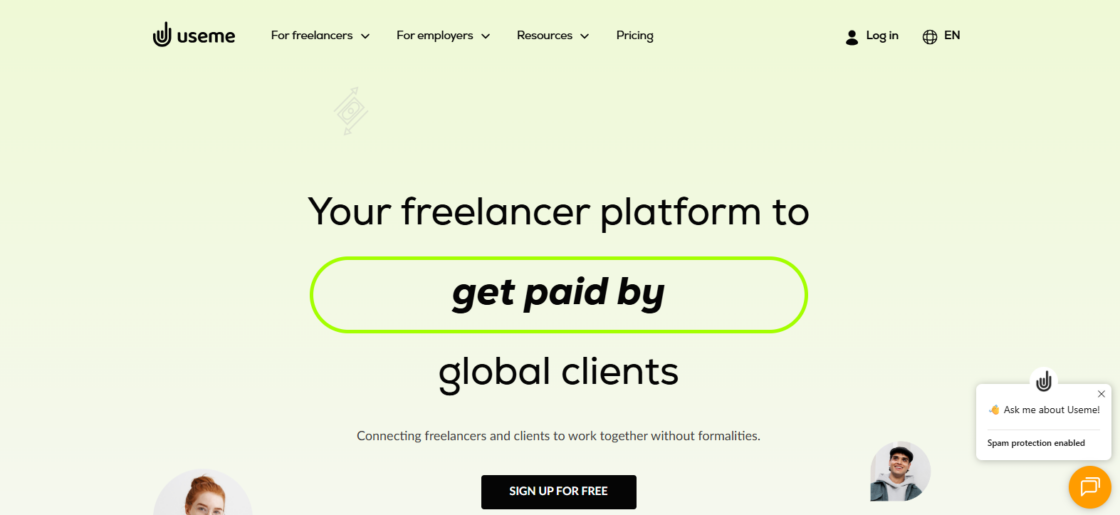
Best for: freelancers who want to work with clients while simplifying contracts, invoicing, and project settlements.
| Useme is two tools in one: a place to find freelance work through Useme Jobs, and a way to get paid for any deal, even one you found elsewhere. Got a client through a referral or social media? Just invite them to Useme, fill in a short form, and we’ll handle the invoice, the contract, and the payment for you. |
Typical projects:
- software development,
- graphic design,
- copywriting,
- marketing,
- translation,
- video production.
Pros:
- helps handle contracts and invoicing;
- offers secure project settlements;
- suits international collaboration;
- supports both freelancers and businesses.
Cons:
- smaller marketplace than some global competitors;
- project availability may vary by industry and region.
For graphic designers, web designers, and video editing specialists, Useme’s built-in contract and invoicing tools are designed to support ongoing client relationships, not just one-off gigs. The platform handles contracts and invoicing itself.
Upwork
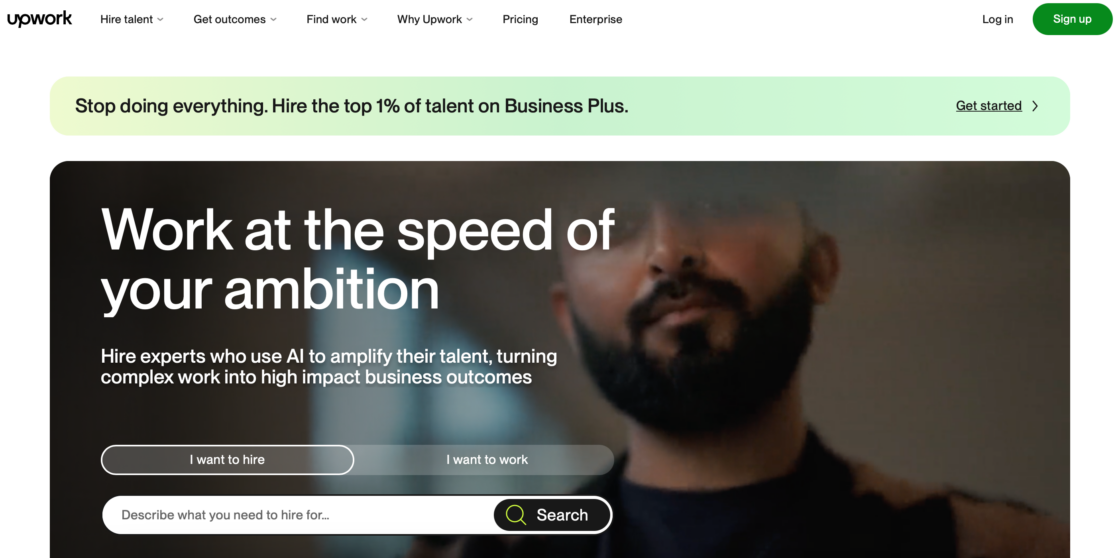
Best for: professionals looking for a broad range of freelance opportunities, from one-time projects to long-term contracts.
Typical projects:
- web and software development,
- writing and editing,
- graphic design,
- digital marketing,
- customer support,
- virtual assistance.
Pros:
- large global client base;
- wide variety of industries;
- supports hourly and fixed-price contracts;
- strong reputation for professional freelance work.
Cons:
- high competition in popular categories;
- service fees reduce earnings;
- building a strong reputation takes time.
Fiverr
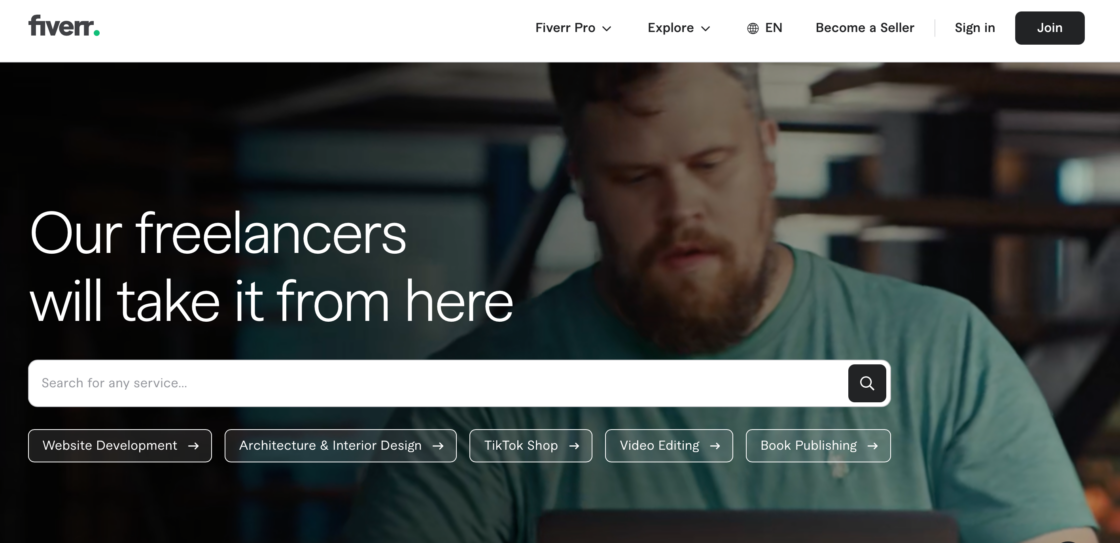
Best for: freelancers who prefer selling predefined services instead of applying for individual jobs.
Typical projects:
- logo design,
- SEO services,
- copywriting,
- voice-over work,
- video editing,
- social media management.
Pros:
- clients can purchase services directly;
- easy to package and scale repeatable services;
- strong global brand recognition.
Cons:
- competitive marketplace;
- pricing pressure in many categories;
- success often depends on reviews and search visibility.
Freelancer.com
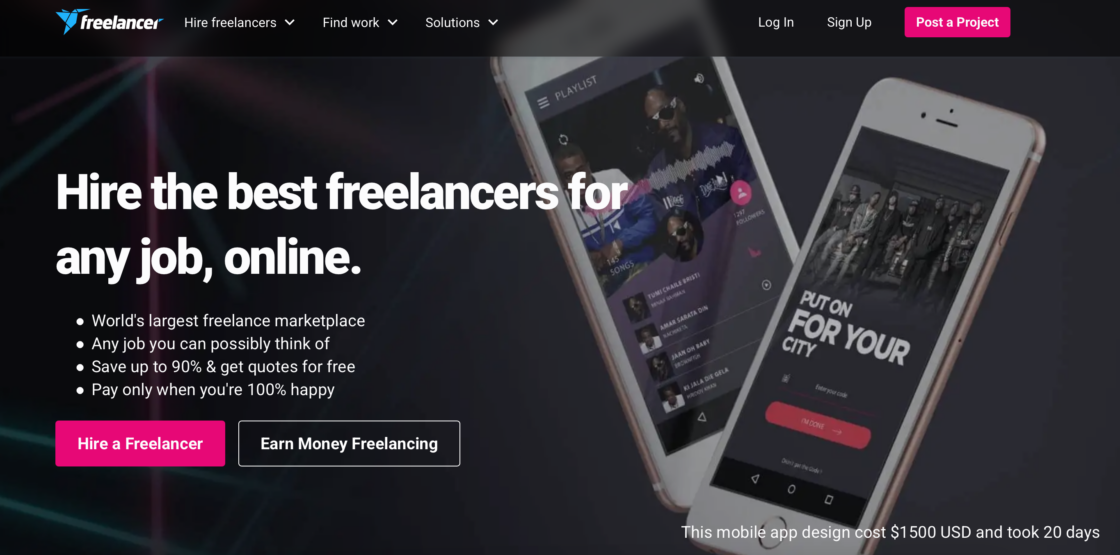
Best for: freelancers who enjoy bidding on projects and taking part in contests.
Typical projects:
- programming,
- engineering,
- writing,
- graphic design,
- data entry,
- business services.
Pros:
- large number of project listings;
- covers many industries;
- offers multiple ways to win work.
Cons:
- competitive bidding environment;
- platform fees apply;
- new freelancers may need time to build credibility.
PeoplePerHour
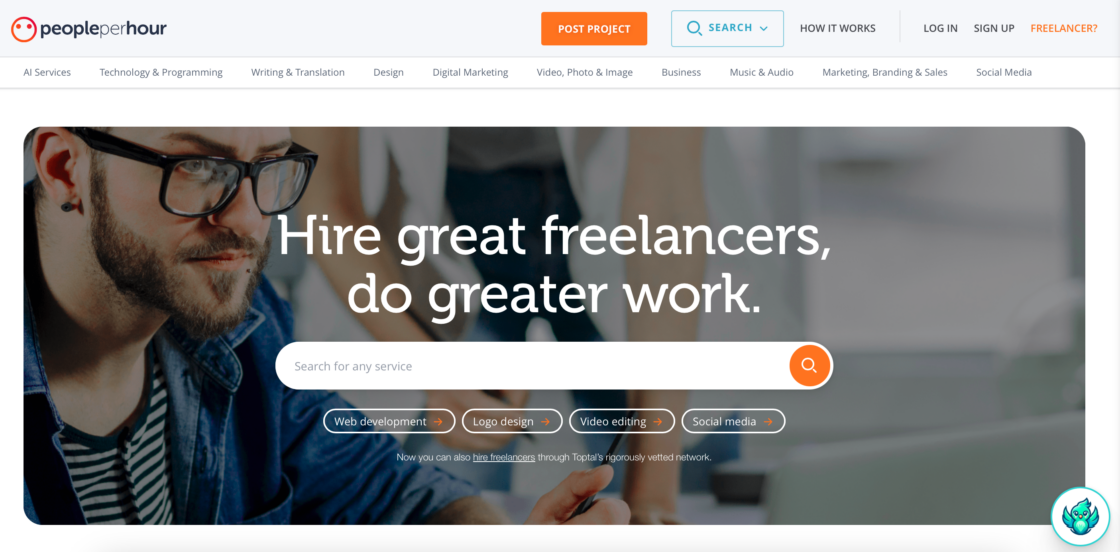
Best for: freelancers seeking projects from small businesses, startups, and clients in the UK and Europe.
Typical projects:
- website development,
- UX/UI design,
- content writing,
- marketing,
- SEO,
- business consulting.
Pros:
- strong presence in the European market;
- supports both custom proposals and fixed-price service offers;
- suits ongoing client relationships.
Cons:
- smaller client base than the largest global marketplaces;
- competition remains high in popular categories.
Premium freelance networks
Some marketplaces focus on experienced professionals rather than the whole freelance market. These platforms often screen applicants before they can join, which means a smaller talent pool and access to larger or more specialized projects.
Examples include:
- Toptal, for highly experienced software developers, designers, finance experts, and project managers;
- Catalant, which connects independent consultants and business experts with organizations seeking strategic support;
These platforms typically expect a strong portfolio and proven experience but may offer access to long-term, high-value engagements.
Because these networks vet applicants, some also run a background check before granting access, which is intended to reassure businesses about who they’re hiring.
Creative marketplaces
Creative professionals often benefit from gig economy platforms built for visual and branding work. Instead of competing across every profession, designers and artists can showcase portfolios to businesses looking for creative expertise.
Popular examples include:
- 99designs, focused on logo, branding, and graphic design projects;
- Crowdspring, which specializes in branding, packaging, and visual identity work;
- Tongal, which connects creative talent with companies producing marketing campaigns and video content.
These platforms place more weight on portfolios, design quality, and creative style than on traditional resumes.
Platforms for developers and technical specialists
Software engineers, data scientists, and other technical professionals have access to platforms built specifically for advanced technical work.
Some options include:
- Gigster, for software development projects;
- Field Nation, which connects IT professionals with businesses that need on-site and remote technical services;
- Kaggle, where data scientists take part in machine learning competitions and collaborative projects;
- Andela, which helps software developers connect with companies seeking remote engineering talent.
Specialized platforms often attract clients looking for experienced professionals with verified technical skills.
Microtask and AI work platforms
Not every online gig involves large client projects. Some gig economy platforms focus on small digital tasks you can complete independently and at flexible hours.
Examples include:
- Amazon Mechanical Turk, which offers a wide range of simple online tasks;
- Appen, which provides data annotation and AI training projects;
- Toloka, where contributors complete tasks that support machine learning systems;
- Scale AI, which offers opportunities related to data labeling and artificial intelligence.
These platforms can offer flexible earning opportunities, though individual tasks generally pay less than professional freelance projects.
Which platform should you choose?
The best platform depends on your goals rather than popularity alone.
- If you’re building a long-term freelance career, a general marketplace can help you build client relationships across multiple industries.
- If you have specialized expertise, a curated platform may give you access to larger projects and premium clients.
- Creative professionals often benefit from portfolio-driven marketplaces.
- Developers and data specialists may find better opportunities on technical platforms.
- If you’re looking for flexible online work that doesn’t require professional experience, microtask platforms can offer an accessible starting point.
Many successful freelancers don’t rely on a single marketplace. Instead, they keep profiles on several platforms, so they can diversify their client base and reduce gaps between projects.
Tips for succeeding on gig economy platforms
Creating a profile is only the first step. The most successful freelancers know how to present their expertise, communicate with clients, and build lasting professional relationships.
Build a strong profile
Your profile is often the first impression a potential client has of you. Make it clear what you do, who you help, and what makes you different.
Instead of listing every skill you’ve ever learned, focus on your strongest services and relevant experience. Use a professional photo, write a concise description, and include keywords that clients are likely to search for.
Keep your profile up to date as your skills, experience, and portfolio grow.
Create a portfolio
Clients want proof that you can deliver quality work. A well-organized portfolio gives them confidence before they contact you.
Include examples that show your expertise and the type of projects you’d like to attract. If you’re new to freelancing, you can showcase personal projects, volunteer work, or sample pieces that reflect your abilities.
Whenever you can, explain the problem you solved and the results you achieved, rather than simply showing the finished work.
Start with smaller projects
Landing your first client is often the biggest challenge. Taking on smaller assignments can help you gain experience, understand how the platform works, and start building your reputation.
Treat every project professionally, no matter its size. Completing several smaller jobs successfully is often worth more than waiting for one large opportunity.
As your profile grows stronger, you can gradually raise your rates and pursue more complex projects.
Collect reviews and testimonials
Positive client feedback is one of the strongest signals of trust on any freelance platform. Good reviews can improve your visibility in search results and make future clients more likely to hire you.
Deliver work on time, communicate clearly, and exceed expectations whenever you can. After you complete a successful project, politely ask the client to leave a review.
Over time, a consistent record of positive feedback becomes one of your most valuable business assets.
Communicate professionally
Strong communication matters just as much as technical expertise.
Respond to messages promptly, ask questions if project requirements aren’t clear, and keep clients informed about your progress. Setting realistic expectations from the start helps avoid misunderstandings later.
Professional communication also means meeting deadlines, being upfront about challenges, and addressing feedback constructively.
Diversify across multiple platforms
Relying on a single gig economy platform can make your income less predictable. Changes to search algorithms, platform policies, or market demand can affect how often you get new projects.
Many experienced freelancers keep profiles on several marketplaces while also building their own professional website or personal brand. Diversifying your client acquisition channels reduces risk and creates more chances to find work that matches your skills.
Don’t compete only on price
Lowering your rates may help you win a few projects, but it’s rarely a sustainable long-term strategy.
Instead, focus on the value you provide. Highlight your expertise, reliability, communication skills, and ability to solve business problems. Clients looking for quality work are often willing to pay more for a freelancer they can trust.
As you gain experience and positive reviews, regularly check your pricing to make sure it reflects the value you deliver.
Build long-term client relationships
Winning a project is only the beginning. Repeat clients can give you a steady stream of work, cut the time you spend looking for new opportunities, and create more predictable income.
Look for ways to become a trusted partner rather than simply completing individual tasks. Deliver consistent quality, communicate proactively, and understand your client’s goals beyond the immediate project.
Strong long-term relationships often lead to larger projects, ongoing contracts, referrals, and a more stable freelance career.
Common mistakes to avoid on gig economy platforms
- Underpricing your work. Low rates can win a first job, but they attract clients who don’t value your time.
- Skipping the contract details. Always confirm scope, deadlines, and payment terms before you start, even on platforms with built-in protections.
- Ignoring taxes until filing season. As an independent contractor, you’re responsible for your own tax payments. Set aside a portion of each payment as you earn it.
- Relying on a single platform. If one marketplace changes its algorithm or fees, income on other platforms can cushion the impact.
- Not reading reviews of clients. Just as clients check your profile, you can often check a client’s hiring history before you accept a project.
Conclusion on gig economy platforms
The gig economy offers more opportunities than ever for people who want to work independently. Whether you’re a writer, developer, designer, consultant, or virtual assistant, online gig platforms let you connect with clients from around the world and build a business on your own terms.
At the same time, not all platforms are equal. Some suit beginners looking to gain experience, while others cater to highly specialized professionals or enterprise clients. The best choice depends on your skills, career goals, preferred type of work, and how you want to collaborate with clients.
FAQ: gig economy platforms
What is the difference between a gig worker and a freelancer?
Freelancers are one type of gig worker who typically do project-based professional work. “Gig worker” is a broader term that also includes delivery drivers, rideshare drivers, and local service providers.
Do gig workers pay their own taxes?
It depends on the country. For example, in the U.S., independent contractors handle their own income and self-employment taxes, since platforms don’t withhold pay like a traditional employer.
Can I use more than one gig platform at once?
Yes, and many experienced freelancers do. Diversifying across platforms can reduce the impact of algorithm changes or slow periods on any single marketplace.
Do gig economy platforms offer health insurance?
Most don’t. A small number of platforms now offer limited benefits access, but this isn’t standard across the industry.
Is gig work classified as employment or self-employment?
In most cases, workers on gig platforms are generally considered independent contractors, not employees, though rules vary by country and platform.
What’s the best gig economy platform for beginners?
General marketplaces like Useme, Upwork, and Fiverr tend to be easier entry points since they don’t require a vetting process, unlike premium networks such as Toptal.
This article was created with the assistance of AI technology.
| Author: Ela Binkowska |