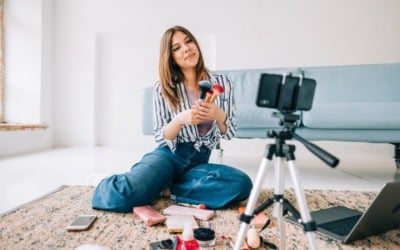
You don’t need a huge marketing budget or a celebrity endorsement to get started. From searching social media to exploring local communities, there are several ways to discover creators who match your business and audience. In this guide, you’ll learn how to find local influencers, decide whether they’re worth contacting, and build partnerships that support your business goals.
Key takeaways: How to find local influencers
- Search where locals look. Use location tags, local hashtags, Google, local blogs, and your own followers.
- Check where a creator’s audience lives. A creator who lives in your city may still have followers far away.
- Start with smaller creators. They may cost less and reach a more focused local audience.
- Track results from day one. Use unique discount codes and UTM links.
Why work with local influencers?
Before you learn how to find local influencers, it helps to know why they are worth the effort. Local influencers can help small businesses connect with people who live nearby. Instead of paying for exposure across a wide area, you can focus on a community that can actually visit your store, book your services, or attend your events. Local campaigns also suit small businesses well, because they keep your spend tied to one target region.
Build trust in your local community through familiar voices
Local creators often cover places, events, and businesses their followers recognize. Their content can feel more relevant to nearby people because it focuses on places and events they know. This makes local influencers useful for introducing your brand to potential customers who haven’t discovered it yet.
Get more value from smaller creators
You don’t need to partner with a celebrity to make an impact. Nano- and micro-influencers have smaller audiences, but their content reaches a more focused group of people. Local creators come in all sizes. According to Brandwatch, nano-influencers usually have 1,000 to 10,000 followers, so they are one group worth checking first when you’re learning how to find local influencers on a budget.
Get more from every content creator partnership
A creator’s photos and videos can introduce your business in a natural, relatable way. Content creation is part of what you’re paying for, so ask how you can use each piece. Depending on your agreement, you may also be able to reuse this content in your own social media posts, website, or local advertising campaigns. Discuss usage rights in advance so you know where and how you can share it.
💡 If you hire creators mainly for content you can reuse, read our guide on how to pay UGC creators globally.
Build lasting relationships with local creators
One collaboration can introduce your business to new customers, but repeated partnerships can help keep your brand familiar within the community. Working again with active local influencers can help your business stay visible over time. A creator who visits your store regularly or follows your business over time may have more opportunities to showcase new products, seasonal offers, and special events.
💡 To manage creator partnerships over time, see our guide to influencer relationship management.
Where to find local influencers
Pick your starting channels
If you’re wondering how to find local influencers, start with social media, online searches, your existing audience, and influencer discovery tools. Each way to find local influencers has its own strengths, so it helps to combine two or three. You don’t need to use every method. Start with the channels your potential customers use most, then build a shortlist of creators who fit your business.
💡 Want to look beyond your city? Read our guide on how to find influencers for your brand.
| Where to look | What to do | Why it helps |
| Instagram location tags | Check posts tagged at local places | You find creators who feature businesses in your area. |
| Local hashtags | Combine your city and your niche | You spot creators who are part of your community. |
| Google and YouTube | Search your city plus your niche | You find local blogs and video channels. |
| Local blogs, media, and press | Read city guides and local news sites | You find writers and columnists who cover your community. |
| Online communities and events | Join local groups and visit markets or meetups | You learn who people recommend. |
| Your own followers | Review tags, mentions, and comments | You find creators who already know your brand. |
| Discovery platform | Filter by location, niche, and engagement | You save time on manual searching. |
Search social media for specific locations and niches
Instagram, TikTok, and YouTube are good places to start learning how to find local influencers. Search for creators who post about your city, neighborhood, or region and cover topics related to your business. Type your city or neighborhood into the search bar on each platform to find creators and local profiles quickly.
Try these methods:
- Search location tags on Instagram. Explore posts and stories tagged at local landmarks, restaurants, shopping areas, and events. Check the top posts for each tag to see who regularly creates content about places in your area.
- Browse local hashtags. Combine a city or neighborhood name with your niche. For example, a restaurant in Miami could search for #MiamiFoodie, while a boutique in Atlanta might try #AtlantaFashion.
- Use location-based keywords. Search YouTube and Google for phrases such as Dallas food vloggers, Austin fitness creators, or Portland fashion bloggers. A Google search for your specific city and niche can also turn up blogs and social media profiles you’d miss on social apps.
- Explore TikTok trends. Look for regional hashtags, local events, and creators who cover places or trends in your community.
Don’t limit your search to people who explicitly call themselves influencers. A local reviewer, food blogger, photographer, or community-focused content creator may have the audience and content style you need.
Check audience geography – where their followers live
When you’re learning how to find local influencers, remember that a creator’s location doesn’t necessarily tell you where their followers live. Someone based in your city might attract viewers from across the country or even overseas.
This matters if your goal is to bring customers into a physical store, fill local appointments, or promote an event. Check audience location data when it’s available, especially before investing in a paid collaboration.
Explore your own followers and existing customers
Your existing audience can be a useful starting point for how to find local influencers. Review your social media followers, customer tags, mentions, and comments to see whether local creators already interact with your business. Your existing customers may also follow creators in your local community, so their tags can lead you to new names.
Some may be customers who post regularly about your industry or recommend businesses to their followers. Others might have mentioned your brand without being approached about a partnership.
Use location-specific hashtags, brand mentions, and competitors
Once you have tried the basic city-plus-niche hashtags, here’s how to find local influencers with a more targeted search. Try different combinations of your location, industry, and customer interests. For example, a New York restaurant could look for food bloggers, neighborhood guides, and local dining recommendations. Local hashtags tied to community events can also show who covers your area.
You can also search for your business name and related brand mentions. Pay attention to the context: is someone recommending your product, reviewing your service, or simply mentioning your business? Positive, relevant posts may reveal potential partners who already know your brand.
Competitors can provide another source of ideas. Review their social media profiles to see which local creators they collaborate with, what types of content they publish, and how audiences respond. Use this research to identify potential opportunities, not to copy another business’s campaign.
Find influencers beyond social media
Influential local voices don’t always have a large social media following. Here are more ideas on how to find local influencers beyond social media:
- Local blogs and websites: Search for city guides, neighborhood publications, food blogs, and industry-specific websites.
- Local media and press: Local news sites and magazines often list their writers and columnists. Some may have audiences worth reaching.
- YouTube channels and podcasts: Look for creators who discuss local news, events, businesses, or interests related to your niche.
- Online communities: Explore relevant local Reddit communities and neighborhood groups to learn who people recommend and whose opinions attract attention. A strong local community often points you to the people it already trusts.
- Events and professional networks: Visit local markets, fairs, conventions, and industry meetups. Community events are also a good place to meet people in person. Speakers, vendors, reviewers, and community organizers may be potential partners.
- Chambers of commerce and partner businesses: Ask local business groups and neighboring shops which creators they work with.
These sources are particularly useful when your business serves a specialized audience or when you want to build relationships beyond one social media platform.
Use an influencer search tool or discovery platform
If manual searching takes too much time, consider an influencer discovery platform. Depending on the service, these tools let you filter creator profiles by location, niche, follower count, engagement, and audience demographics. An influencer search tool or influencer marketing platform often includes an influencer database. You can search influencers and filter creators by city, niche, and engagement rates from a single dashboard. Some platforms also provide performance data and influencer management features, making it easier to organize candidates and compare their profiles.
Before paying for a tool, check whether its search features cover your target location and social platforms. A free search may be enough for a small campaign, while businesses managing multiple creators may benefit from more advanced filters and reporting. If you’d rather not search yourself, a local influencer agency may show you how to find local influencers and check them for you. Ask how it verifies audience location and engagement before you sign.
Research creators in your influencer database before reaching out
Once you know how to find local influencers and have a shortlist, take a closer look at their profiles. Check how regularly they post, how their audience interacts with their content, and whether their style and values fit your brand. Look at their top posts, too, to see how they present their favorite topics.
Look beyond follower counts. We cover engagement, past collaborations, and brand fit in the next section.
It’s also worth engaging with their content before sending a pitch. A thoughtful comment or genuine interaction can help you become familiar with their work. Show that you’re genuinely interested in what they do.
Found your local creators? With Useme, paying them is easy. No paperwork, no chasing invoices. Just pay and get back to the work that matters.
How to choose the right influencers for your local business
Knowing how to find local influencers is only the first step. You also need to decide which creators are worth working with. A large following can help you reach more people, but it doesn’t guarantee that those people will become your customers.
Look for content relevant to your business and audience
The influencer’s niche should match your business and the people you want to reach. Review their recent posts to understand what they usually talk about and how they present products or services. Ask yourself:
- Does their content relate to my industry or target audience?
- Would my product or service feel like a natural fit in their posts?
- Do their tone, values, and style align with my brand?
- Have they created content similar to the collaboration I have in mind?
A creator doesn’t need to cover your exact industry in every post. What matters is whether their audience has a genuine reason to care about your offer.
Look for active influencers: Evaluate engagement, not just follower count
Follower count can give you a rough idea of an influencer’s reach, but it doesn’t show how actively people interact with their content.
Review likes, comments, shares, and other available engagement metrics. Compare engagement rates across several posts, not just the latest one. Read the comments, too. Are people asking questions, sharing recommendations, and discussing the content? Or are most interactions generic?
Compare creators with similar audience sizes and content formats. A smaller influencer with an active, relevant community may be a stronger partner than someone with a much larger but less engaged following.
Spot fake followers
When you’re learning how to find local influencers, keep in mind that fake followers exist even on small accounts. Brandwatch lists three warning signs:
- a sudden jump in followers,
- very few comments compared with likes,
- audience demographics that don’t match the creator’s niche.
Review what creators publish and their previous brand collaborations
Past partnerships can help you understand how a creator works with businesses. Look for sponsored posts, product reviews, local recommendations, and other promotional content.
Consider whether their brand partnerships feel natural and whether they explain products or services clearly. Check how often they publish sponsored content. If almost every post is promotional, their recommendations may have less impact on their audience.
You should also review the brands they’ve worked with. A partnership with a direct competitor isn’t necessarily a dealbreaker, but it may affect whether the creator is a suitable choice for your campaign.
Compare rates and content quality with other influencers
Your budget matters, but the cheapest or most popular creator isn’t automatically the best option. Compare potential partners based on their audience, engagement, content quality, and proposed fees.
Ask what their rate includes. One creator might offer a single social media post, while another might include several videos, stories, or additional content. Find out how much time they spend on content creation and how they produce content, such as filming and editing, so you can judge the price fairly. If you want to reuse their photos or videos in your own marketing, discuss usage rights and any extra costs in advance.
Also, consider whether their usual content format supports your goal. Short videos may help introduce a local business to new customers, while detailed reviews or tutorials might be more useful for explaining a service or product.
Choose someone who can build a genuine connection with your brand
The strongest partnership should make sense for both your business and the creator. Look for someone who communicates professionally, understands your goals, and can present your offer in a way that feels authentic to their audience.
You don’t need to control every word they publish. Give them room to create content in their own voice.
Ultimately, choose local influencers based on audience fit, trust, and the value they can bring to your business – not follower count alone. A well-matched creator can help you connect with the right community and build a partnership that benefits both sides.
How to reach out to local influencers
After you’ve learned how to find local influencers and picked one who fits your business, it’s time to make contact. Your first message doesn’t need to be complicated. Focus on showing that you’ve researched the creator, explaining why you’d like to work with them, and suggesting a clear next step.
Follow these steps:
- Use the contact method the creator lists.
- Personalize your message.
- Make a clear offer.
- Agree on the details in writing.
- Share feedback and plan the next project.
Choose the right way to contact them
Start by checking the influencer’s profile for a preferred contact method. Many creators list a business email in their bio or provide contact details on their website. Others may welcome collaboration inquiries through direct messages on Instagram or TikTok.
Personalize your message
Avoid sending the same generic pitch to every creator on your list. Mention a specific post, project, or aspect of their content that caught your attention. Then explain why you think their audience would be interested in your business.
For example, if you run a local coffee shop, you could mention a recent video where the creator explored independent cafés in your area. This shows that you understand their content and have a genuine reason for reaching out.
Your first message should cover three basics:
- Who you are: Briefly introduce yourself and your business.
- Why you’re contacting them: Explain what makes the creator a good fit.
- What you have in mind: Suggest a collaboration and invite them to discuss the details.
Make your offer clear
Creators need to understand what you’re asking them to do and what they’ll receive in return. Depending on your budget and campaign goals, you could offer a fixed fee, a product or service, an affiliate commission, or another agreed arrangement.
Be specific about the potential collaboration. Common collaboration types include:
- sponsored posts,
- product reviews,
- event invitations,
- social media takeovers.
If you have a budget in mind, sharing a range can help establish expectations early. Don’t assume that a gifted product or free service will be enough compensation for the time and work involved in creating content.
💡 For payment models, rates, and timing, read our guide on how to pay influencers.
💡 Paying a creator who works for themselves can also mean tax paperwork. Learn more in our guide to Form 1099-NEC.
Agree on the details before work begins
If the influencer is interested, discuss the terms before confirming the partnership. Make sure both sides understand what the collaboration includes.
Clarify:
- Deliverables: How many posts, videos, stories, or other assets will they create?
- Timing: When will the content be published?
- Compensation: What is the fee or other agreed payment, and when will it be paid?
- Content requirements: Are there key messages, tags, links, or hashtags to include? Don’t forget a clear sponsorship disclosure.
- Creative freedom: Which elements are essential, and where can the creator use their own style?
- Usage rights: Can you repost or reuse the content on your website, social media, or in paid ads?
- Measurement: Will you use a discount code, trackable link, or another method to measure results?
Put the agreed terms in writing, even if you’re working with a small local creator. Clear expectations help prevent misunderstandings and make the collaboration easier to manage.
Writing terms and tracking paperwork takes time. Useme streamlines payments for influencer campaigns. You don’t need to draw up contracts on your own, and all your accounting documents are in one place. If you work with many creators, compare options in our guide to influencer payment platforms.
💡 Read how Good One PR, a communication agency, used Useme to pay influencers without long contract paperwork in this case study.
💡 Paying many creators at once? Learn how bulk payments work.
Focus on building relationships, not just a one-time campaign
Treat your outreach as the beginning of a professional relationship. Be respectful of the creator’s time, respond promptly to questions, and make sure you follow through on the terms you agree on.
If the collaboration goes well, share feedback and discuss future opportunities. A local creator who understands your business and audience may become a valuable long-term partner, helping you promote new products, seasonal offers, and community events. Collaborating with the same creators again also saves you the time of learning how to find local influencers all over again.
💡 For more ideas, read our guide to influencer relationship management.
Common mistakes to avoid when finding local influencers
Finding a local influencer can help you connect with potential customers, but choosing the wrong partner can waste time and marketing budget. Avoid these common mistakes when you are learning how to find local influencers and planning your first collaboration.
- Choosing influencers based only on follower count: A large audience doesn’t automatically mean better results. An influencer may have thousands of followers but reach very few people who are likely to become your customers.
- Assuming every local influencer has a local audience: An influencer might live in your city but attract followers from across the country or abroad. If you run a local business, those followers may be less likely to visit your store, book an appointment, or attend an event.
- Ignoring engagement and content quality: Follower counts don’t tell you how people respond to a creator’s content. Before reaching out, review several recent posts and look for meaningful comments, shares, saves, and consistent interactions.
- Overlooking brand fit and authenticity: A creator can have an engaged local audience and still be a poor match for your business. Their usual topics, values, and communication style should make sense for your brand.
- Expecting free promotion in exchange for a gift: Sending a free product, offering a free meal, or providing a service doesn’t guarantee that an influencer will create content for your business. Creators invest time in planning, filming, editing, and publishing their work.
- Sending generic outreach messages: Copying and pasting the same message to every influencer can make your approach feel impersonal. Creators are more likely to understand your proposal when you explain why you chose them and how the collaboration relates to their content.
- Leaving collaboration terms unclear: Unclear expectations can lead to misunderstandings about what the influencer needs to create, when the content should go live, and how much they will be paid.
- Judging influencer marketing by immediate sales only: Not every influencer campaign generates sales right away. Some collaborations introduce your business to new customers who may follow your account, visit your website, or consider your services later.
- Failing to track results: Without tracking, it’s difficult to know whether a collaboration was worth the investment. Before launching a campaign, decide which metrics matter and how you’ll collect the data.
Conclusion: How to find local influencers
Learning how to find local influencers starts with understanding your audience and knowing what you want to achieve. You don’t need to work with the most popular influencer in your area to see results. A creator with a smaller, relevant audience may be better suited to your goals, especially if you want to attract nearby customers and build lasting relationships within your community.
Once you find the right partner, agree on clear collaboration terms, track campaign performance, and use the results to improve future campaigns. If you work with freelancers, influencers, or other independent creators, Useme streamlines your accounting. That leaves you more time to build productive partnerships and grow your business.
Frequently asked questions on how to find local influencers
How do you find local influencers near you?
Search your city or neighborhood on Instagram, TikTok, and YouTube. Check location tags and local hashtags. Add Google searches, local blogs, and your own followers. Then confirm that each creator’s followers live nearby. For more ideas beyond your city, read our guide on how to find influencers for your brand.
Do influencers have to disclose paid partnerships?
In the U.S., the FTC expects creators to disclose any material connection to a brand. Payment and free products both count. The disclosure must be easy to see and placed with the post itself.
How do you pay local influencers?
You can pay local influencers in a few ways. The most common is a flat fee for each post, video, or campaign. Some brands pay a share of sales through an affiliate link or discount code. Others offer free products or services, often together with a smaller fee.
Before you pay, agree on the details in writing: what the influencer will create, when, and for how much. This protects you both.
The simplest way is to pay through a platform like Useme. You make one payment, skip the paperwork, and get an invoice for your records. With bulk payments, you can pay many creators at once and combine several collaborations into one invoice. To get bulk payment options, register on Useme and contact support for a demo.
💡 Learn more in our guides to how to pay influencers, bulk payments, and influencer payment platforms.
This article was created with the assistance of AI technology for informational purposes only. It doesn’t constitute legal, financial, or tax advice.
| Author: Ela Binkowska |