
This shift is clear: 74% of companies say they want to continue or expand their work with freelancers in the next two years (source: Useme Business Report 2025).
Freelancing is closely connected to platforms (like Useme) that connect experts with clients worldwide. It gives people more control over the projects they choose and how they work.
Let’s look at some numbers that show how freelancing has changed over the past ten years.
How has freelancing changed over the years?
A few years ago, freelance work looked very different. When larger freelance platforms and online marketplaces first appeared, freelancing was often seen as a side job rather than a real alternative to traditional employment. Many people saw it as a temporary fix instead of a serious career path.
How people see freelancers has changed: in 2016, many were seen as unemployed by choice, but today they are recognized as in‑demand specialists who make a real impact.
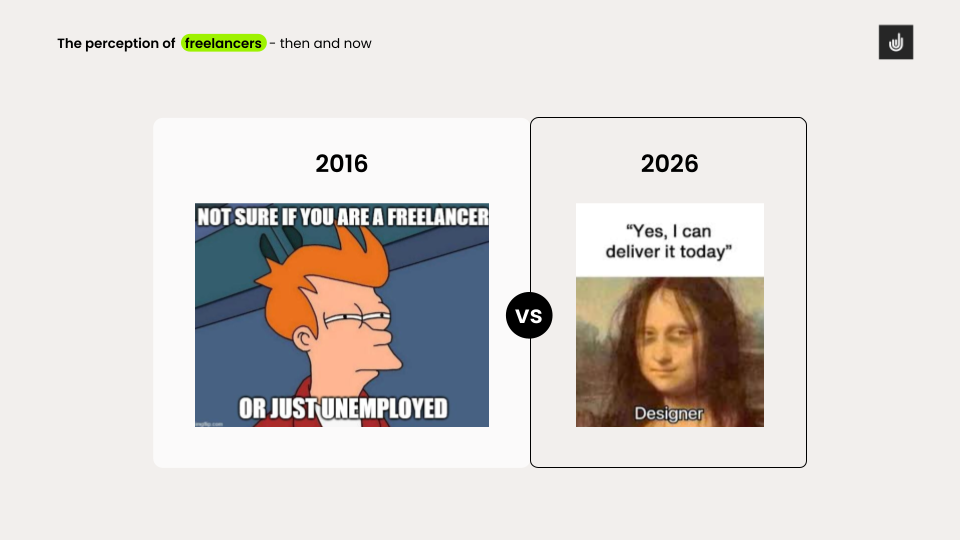
The perception of freelancers – then and now.
In 2016, the data show that the freelance sector was still young and experimental:
- 48% of freelancers combined independent work with a full‑time job.
- Only 9% earned more than 5,000 PLN per month from freelance work.
- Just 6% of freelancers were over 45 years old.
- Most cooperations were short projects for micro‑companies, with low formalization.
For most people, freelancing was a side job rather than a stable way to earn a living. By 2025, things have changed a lot:
- 41% of freelancers live only from their own projects.
- 22% earn more than 5,000 PLN per month.
- The share of freelancers aged 45+ grew from 6% to 18%.
- Specialization is on the rise, with more people staying in a single field for more than 5 years.
This points to a more mature freelance market. Freelancers are staying longer, building lasting careers, and using their skills on many projects for different clients and industries.
How companies changed their view of freelance work
It isn’t just freelancers who have changed. Companies now see freelance work differently too. Early on, many businesses used freelancers mainly to save money or fill in when staff were away.
Now, freelance work is a normal part of the global economy and team building, especially in creative fields, tech, design, and marketing. Many companies see freelancers as a standard choice alongside agencies and full-time staff.
Recent data show this structural shift:
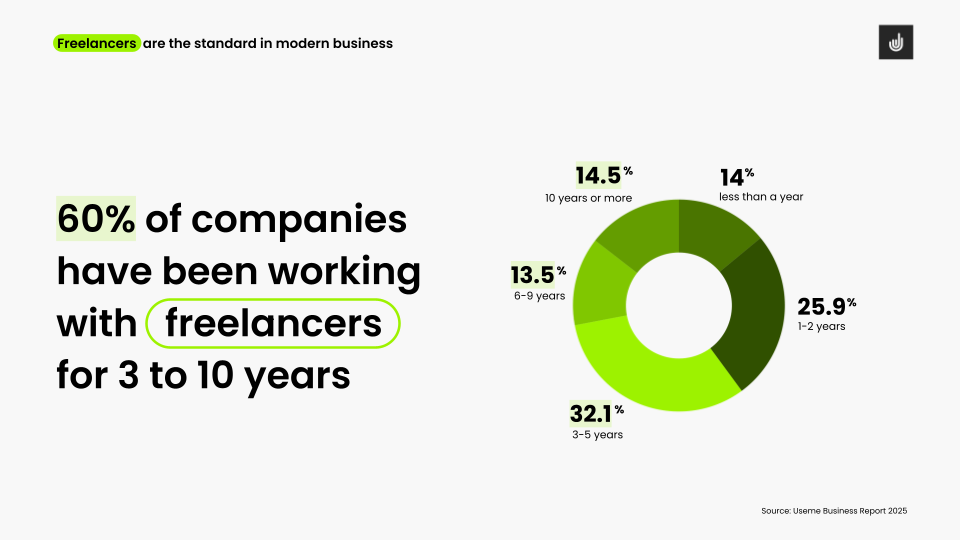
- 60% of companies have been working with freelancers for 3 to 10 years.
- 41% work with the same freelancers for more than a year.
- 56% collaborate with freelancers at least once a month.
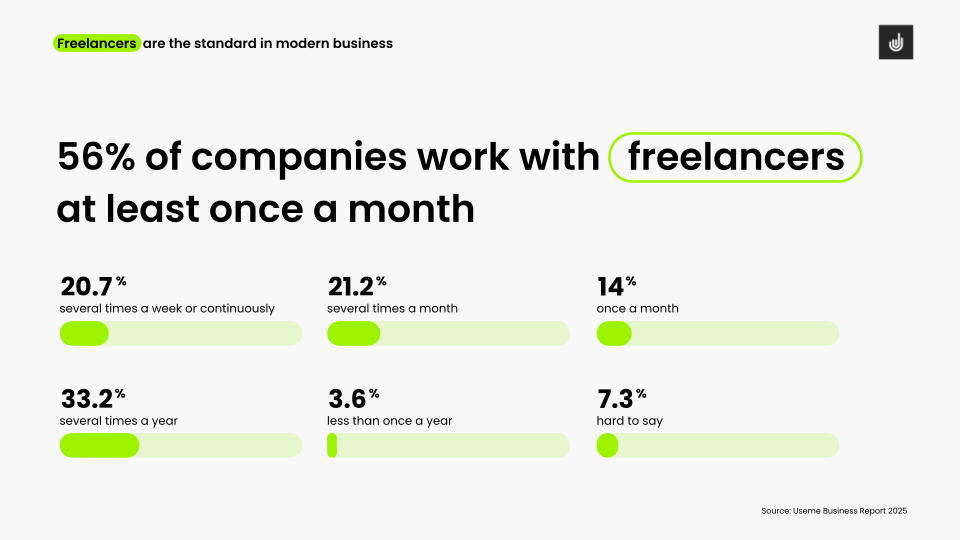
Freelancers are the standard in modern business. | Source: Useme Freelancing Report 2025.
In short, freelancers are no longer used only when something goes wrong. Now they are a normal part of how companies plan, look for skills, and handle new projects.
This change is also visible in business results. About 7 in 10 companies say freelancers have had a positive impact on their overall performance. That is a strong sign that freelance work is no longer treated as temporary support, but as a real contributor to business growth.
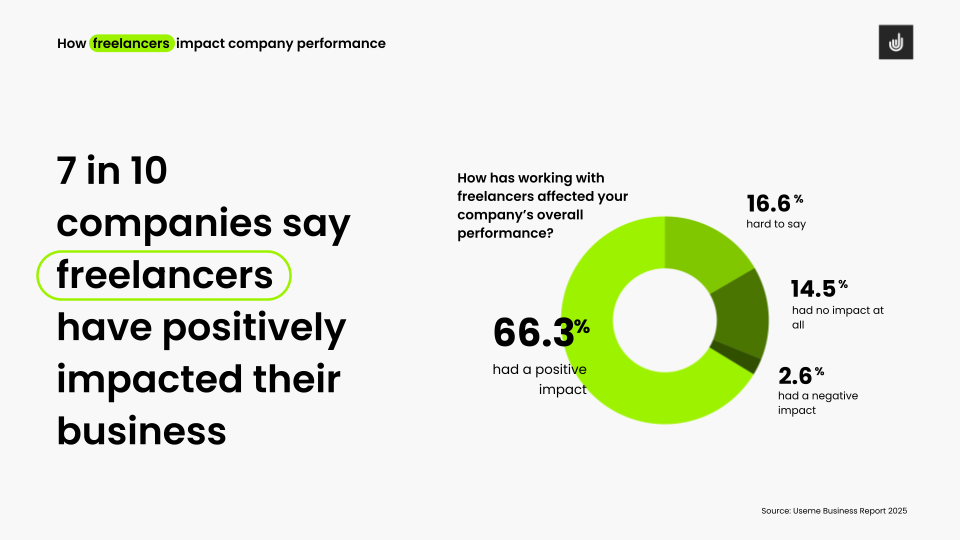
How freelancers impact company performance | Source: Useme Freelancing Report 2025.
The role of freelancers in the modern labor market
To see the progress in freelancing, let’s compare what freelancers and companies say.
Freelancers say:
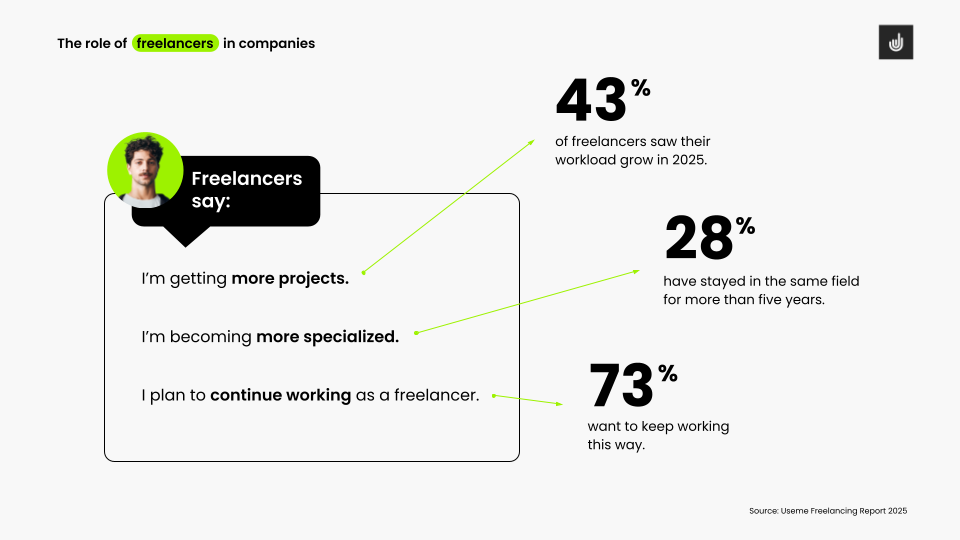
- 43% saw an increase in the number of projects in 2025.
- 28% have stayed in the same specialization for more than five years.
- 73% plan to continue working in this model in the future.
This shows that freelancing is now a stable career, not just a short-term trend. Many freelancers run their work like a small business, choosing projects, managing clients, and using technology, including AI, to work faster and better.
The role of freelancers in companies. Source: Useme Freelancing Report 2025.
Companies say:
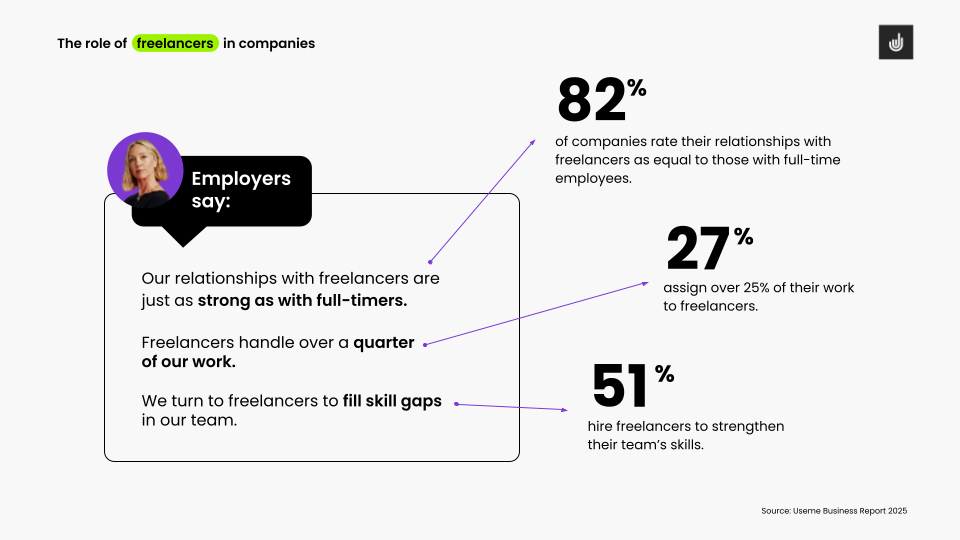
- 82% of companies rate their relationships with freelancers as equal to those with full-time employees.
- 51% hire freelancers to strengthen their team’s skills.
- 27% assign over 25% of their work to freelancers.
The role of freelancers in companies. Source: Useme Freelancing Report 2025.
Also, 42% of companies use freelancing to lower costs, and 30% use it to handle more work. That’s why a freelancer’s main value is no longer price, but skills: unique expertise, experience, quality, and fast delivery.
Freelancers vs agencies and full-time jobs
In the past, companies often chose between hiring an agency or a full-time employee. Now, hiring a senior freelancer is often a strong third option.
When companies compare freelancers and agencies, they highlight:
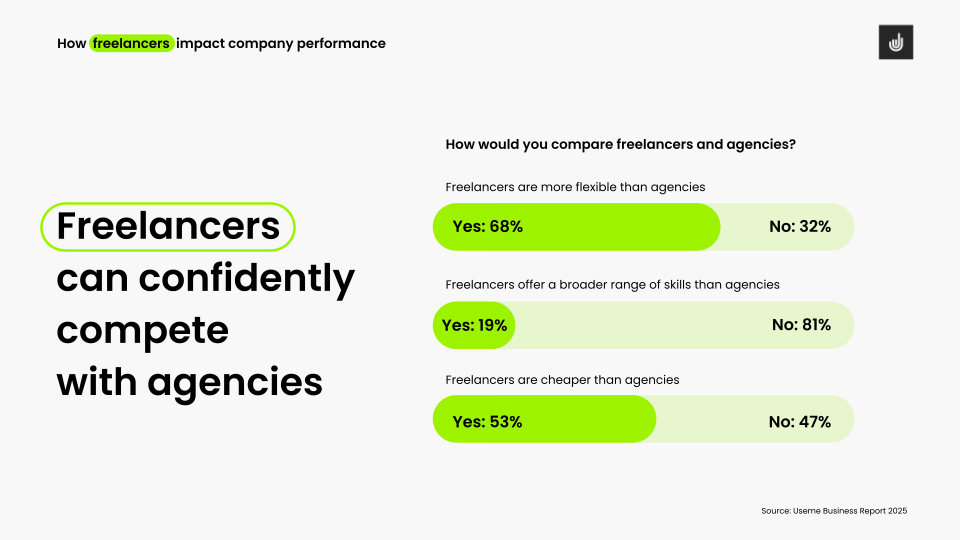
- 68% say freelancers are more flexible than agencies.
- 53% say freelancers are cheaper.
Flexibility matters a lot today. Agencies have many layers and set processes, but a freelancer can make decisions, adjust the work, and move quickly. When managed well, this can be a great experience for everyone involved.
Compared to traditional employment, freelancers offer more flexibility. They can choose different projects, while businesses get easier access to talent when they need to move fast.
This doesn’t mean full-time jobs are going away. Today, companies build teams using a mix of full-time employees, agencies, and independent experts.
How would you compare freelancers and agencies | Source: Useme Freelancing Report 2025.
From one-off gigs to long-term collaboration
A clear sign that freelancing has matured is the shift from one-time tasks to long-term working relationships.
By 2025:
- 56% of companies work with freelancers at least once a month.
- 60% have been collaborating with them for 3 to 10 years.
- 41% keep working with the same freelancers for over a year.
Freelancers are the standard in modern business. Source: Useme Freelancing Report 2025.
This is a big change from the early days, when freelance work was mostly short and loosely defined projects. Now, many freelancers are steady partners who know how a company works and help with many projects and services.
What turns one-off jobs into real long-term partnerships? Four key factors make a big difference:
- A clear scope of work.
- A simple process and summary after the project.
- Basic structure for communication.
- And useful feedback.
Without these elements, even good work can feel like just another small task.
Expectations are rising on both sides
Freelancing is growing in a world shaped by technology, social media, and artificial intelligence. Clients can now find specialists from anywhere, compare offers, review past work, and choose the best fit. At the same time, freelancers can reach clients worldwide by sharing their skills, approach, and case studies online.
Because of this, expectations are rising:
- Companies expect more proactive input, strategic thinking, and speed.
- Freelancers expect clearer structure, timely payments, and recognition.
Most misunderstandings still focus on four areas: scope, response time, price vs. value, and responsibility. This new balance of access and choice encourages both sides to act more professionally and treat each project as part of a long-term relationship.
4 non-negotiables for working with top freelancers
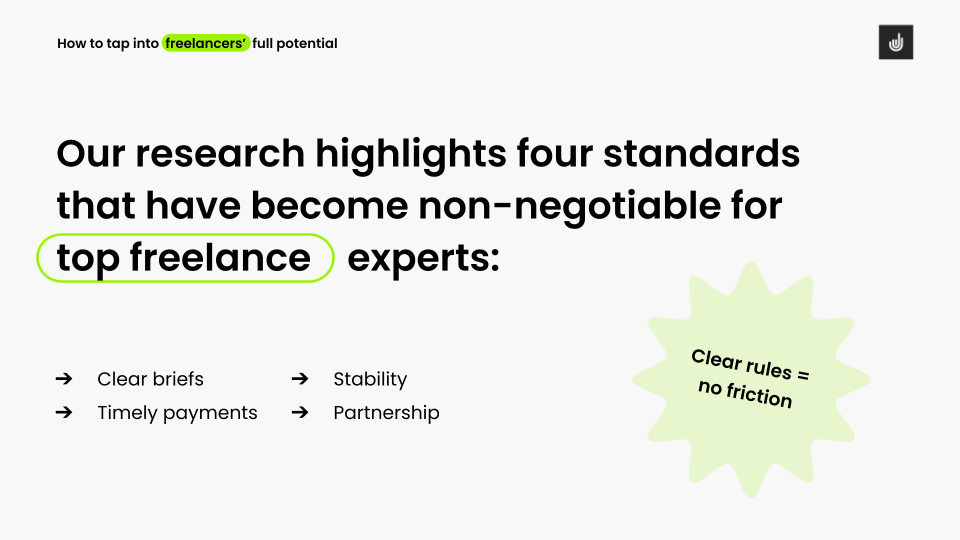
How to tap into freelancers’ full potential.
To make the most of these changes, 4 standards are now essential:
1. Clear briefs
A good brief explains the idea, goal, limits, and what success looks like. It saves time, keeps the budget on track, and helps prevent a small task from turning into a big project.
2. Timely payments
More people rely on freelancing as their main source of income. Timely payment is a standard of professional cooperation, just as important as meeting deadlines on the freelancer’s side.
3. Stability
Working together regularly helps everyone. Companies get someone who understands their tools and style. Freelancers get the stability they need to plan, grow, and improve their skills and technology.
4. Partnership
Treating freelancers as equal partners means asking for their input. When you listen to their ideas and feedback, you get better results and new ideas.
Poland’s freelance sector in the global economy
Poland’s freelance sector is closely linked to creative industries, IT, and digital services. Polish freelancers combine strong technical skills, remote work experience, and competitive rates, which helps them attract clients from around the world.
Still, there’s room for growth:
- Rates are often lower than in Western Europe.
- Fewer freelancers run a strong global personal brand.
- And some still rely mostly on local clients, even if they could reach further.
As more freelance platforms, content types, and tools become available, this gap will likely close. The trend is moving toward more cross-border work and more Polish freelancers joining the global market.
The evolution of freelancing: from looking for gigs to building your own business
In short, a few years ago, many freelancers focused on simply finding the next gig. Today, more of them see their work as a business. They plan their income, choose the clients they want to work with, and manage their careers more intentionally.
For companies, this means access to more experienced, independent professionals who can help build flexible, modern teams. And for the job market as a whole, it confirms that freelancing is a mature and growing part of the economy, playing a bigger role every year.