

Hiring people in multiple countries is easier today, but you still need tools that help you stay compliant with local tax regulations and pay your global workforce on time. Deel is a well-known global employment platform, but it can feel heavy if you only need fast contractor payments or simple workflows.
That’s why many companies search for Deel competitors. You may want a tool with clearer pricing, easier onboarding, or excellent support. You may also need a platform built for freelancers, not large employee teams.
In this guide, you will find alternatives to Deel that help you manage global hiring, reduce compliance and risk management issues, and work safely with contractors in multiple countries.
Understanding the Deel benchmark
Before you look at alternatives, you need to understand what Deel offers today. Deel is one of the largest players in global hiring and payroll, and many companies consider it the market standard.
Deel processes $11.2 billion in global payroll across nearly 100 currencies, which shows the scale of its operations. Its EOR pricing is also widely recognized. Deel has set industry benchmarks with its $599/employee/month EOR pricing and 150+ country coverage. Deel has also embraced cryptocurrency, launching USDC payroll funding and crypto withdrawals via Coinbase in April 2025.
Deel’s reputation is confirmed by user reviews: as of 2025, Deel holds a 4.7-star rating on Trustpilot, based on over 8,000 reviews (November 2025). This high score reflects strong user satisfaction with the platform’s features and service.
These key features make Deel a strong global employment platform. But they also come with some limits. Higher contractor fees at $49/contractor/month, limited customization options, and accumulating costs that surprise growing companies can make the platform less effective for teams that want simple workflows or budget-friendly solutions.
→ If you work mainly with freelancers and need a simple way to manage contracts and payments worldwide, Useme may be a better fit than complex EOR platforms.
What matters most in Deel alternatives?
When you look for a Deel alternative, you want a tool that makes your work easier. You need a platform that helps you hire, pay, and manage people in other countries – without extra steps or hidden costs. You also want strong global payroll management, so you always pay your team on time, no matter where they live. Below, you will find the key features you should compare before you choose your next global HR solution.
- Custom workflows: choose a platform that lets you build custom workflows for your hiring and payroll processes. This helps you adapt the system to your business needs.
- Multiple tools in one place: the best global employment platforms offer multiple tools for payroll processing, tax management, compliance services, expense management, and workforce management. This saves you time and reduces the need for third-party vendors.
- Employment contracts: make sure your provider helps you create and manage employment contracts that follow local laws and local compliance rules.
- Intuitive platform: an intuitive platform makes the onboarding process and daily operations easy for your team, even if you manage international teams.
- Dedicated account manager and dedicated support team: for enterprise companies and tech companies, having a dedicated account manager and dedicated customer support is key. It helps you solve problems fast and avoid slow customer service.
- Built-in compliance and compliance expertise: your provider should offer built-in compliance and compliance expertise to reduce compliance risks and legal risks, especially when hiring in multiple countries.
- Transparent pricing and no additional fees: watch out for hidden fees and additional fees, especially with annual billing models.
- Comprehensive global coverage: if you plan global expansion, pick a provider with extensive global coverage and comprehensive global coverage for both employees and contractors.
- Talent management and employee costs: good platforms help you manage employee data, control employee costs, and support talent management for your global workforce.
- Shorten payroll lead times: fast payroll processing and global payments help you pay employees and contractors on time, no matter where they are.
- Record services: some platforms offer record services to keep all your employment contracts, payroll records, and compliance documents in one place.
What is an Employer of Record (EOR)?
Employer of Record (EOR) services provide legal employment status for teams in various countries without needing a local entity. The global coverage of EOR services can vary significantly by provider, with some operating in over 180 countries. EOR providers typically manage payroll, taxes, and benefits for employees hired through their services. Onboarding new employees through an EOR is generally streamlined and often completed within a few days.
Many EOR platforms enable employees to access a range of benefits, including healthcare and retirement plans. EOR services simplify the administrative tasks associated with hiring international staff, allowing businesses to focus on core operations. Providers can also assist with visa sponsorship and immigration support for global employees. Many EOR platforms offer centralized tools for managing employee data, payroll, and compliance from one interface.
EOR services allow businesses to hire and onboard employees or contractors while ensuring compliance with local employment laws. Finally, EOR solutions help companies mitigate legal risks when hiring international employees by handling compliance with local labor laws.
11 top Deel alternatives
Many companies want simpler tools, faster payments, or clearer pricing than what they get with Deel. Below you find the most common alternatives to Deel. Each option offers different strengths. Some focus on EOR services for international employees. Others work better for contractors and task-based projects. Compare them to choose the setup that fits your workflow best.
The order of the alternatives below does not reflect their ranking or quality.
Comparison table (Part 1): Top Deel Alternatives
| Provider | Type (EOR / Payroll / Contractors) | Coverage | Pricing | Speed / Onboarding | Key strength | Main weakness |
| Pebl (formerly Velocity Global) | EOR | 185+ countries | Similar or higher | Fast | Very strong compliance + payroll processing | Not ideal for SMBs; weaker for contractors |
| Useme | Contractor payments | Global freelancers | Pay-per-task (lower) | Very fast | Simple, clear pricing; contracts + tax docs; strong support | Not EOR; no employee modules; best only for contractors |
| Globalization Partners (G-P) | EOR | Large global network | Premium | Standard | Strong enterprise support + compliance | Complex for small teams; no mass payouts |
| Oyster HR | EOR + Payroll | 180+ countries | Similar | 1–2 days | Strong multi-currency payroll, good automation | Self-service support; fewer benefits than Deel |
| Rippling | HR + IT + Finance + EOR | 90+ countries | Modular (can be higher) | Slow (≈4 weeks) | Deep automation + ecosystem | Heavy for small teams; pricey per module |
1. Pebl (formerly Velocity Global)
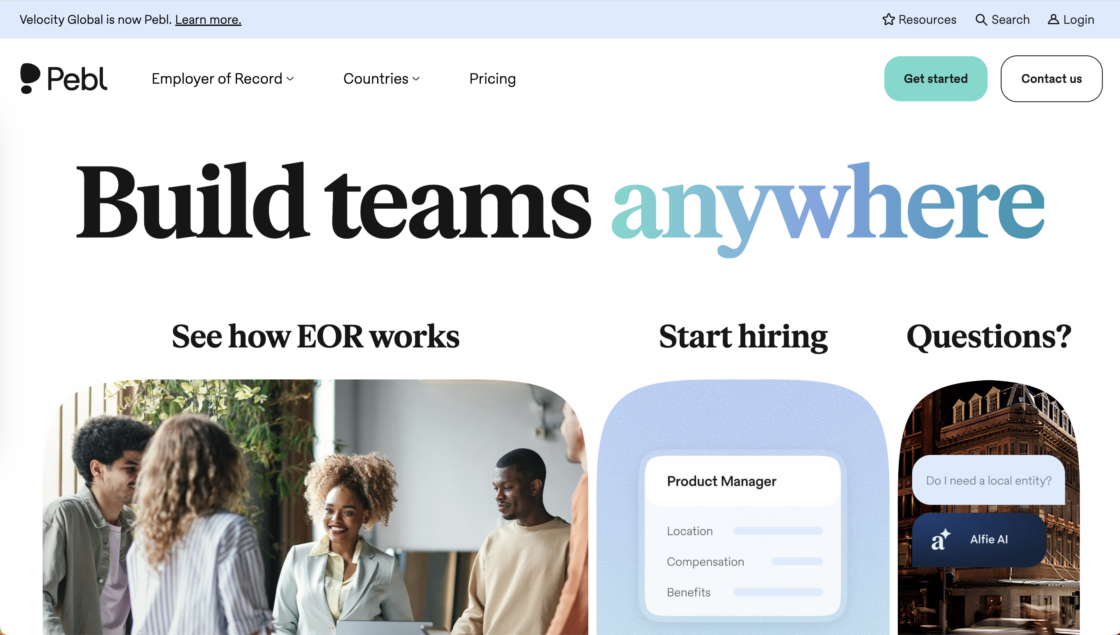
Pebl is a global EOR provider that helps you hire and manage full-time international employees.
Pricing information
- EOR services start around $599 per employee per month ($699 if billed monthly).
- Pricing includes global payroll processing, tax compliance, and HR core services.
- No annual commitments; pay only when employees start working.
- Customized quotes available with instant cost visibility through an AI-powered platform.
- The platform emphasizes transparent pricing, combining salary, taxes, and benefits costs.
- Pricing may vary depending on company size, location, and services required.
Pros vs Deel
- You get very broad country coverage. Pebl supports hiring and managing employees across over 185 countries.
- You receive strong payroll and compliance support. Pebl facilitates global payroll processing and compliance management in over 185 countries.
- It works well if you want to scale your global teams fast.
Cons vs Deel
- Small businesses may find the platform too advanced.
- Deel gives you a more competitive entry price in many markets. Deel offers a competitive entry price for EOR services compared to Remote and Papaya Global.
- It is not the best fit if you focus mainly on contractor payments.
2. Useme – for contractor payments
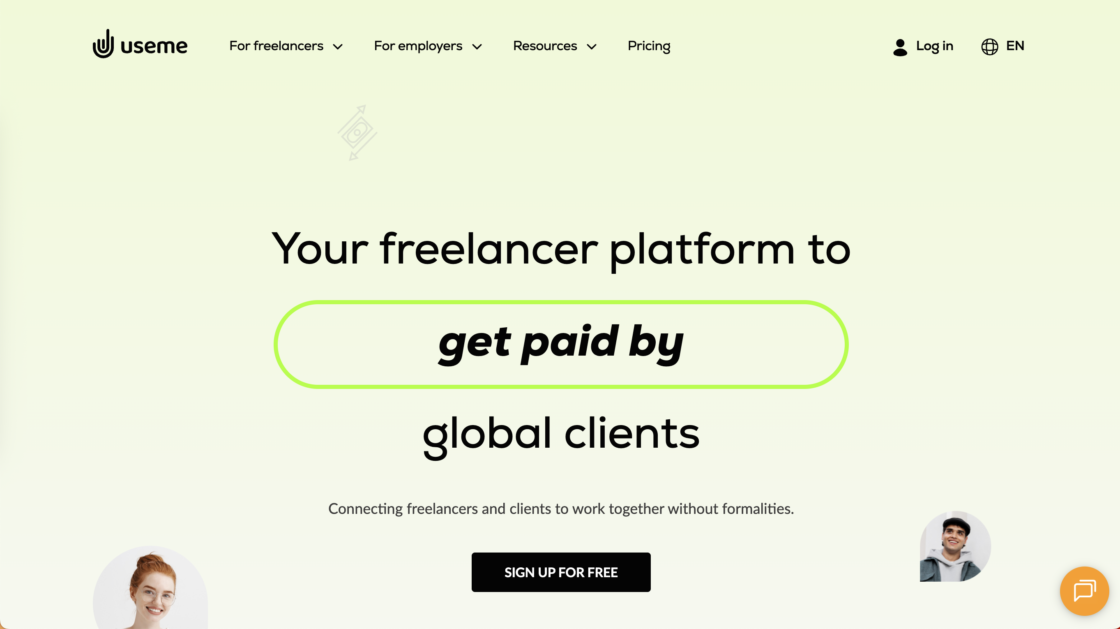
Useme is a simple platform that helps you pay international freelancers quickly and safely. The platform is highly rated by users, with a score of 4.5 out of 5 stars on Trustpilot (November 2025). Clients consistently praise Useme for its excellent customer service, highlighting fast and helpful support that makes the whole process smooth and stress-free.
Pricing model
- Useme charges a service fee based on a percentage of the freelancer’s invoice. This fee starts at 4.5% but gets lower if you pay more freelancers each month.
- There are three pricing plans based on your average number of freelancers per month.
- The service fee for each transaction is never less than €5 and never more than €99.
- Useme doesn’t charge any subscription or setup fees; you pay only when you pay a freelancer.
- You receive benefits such as bulk payments, escrow service, contract and tax document automation, and excellent customer support, all included in the pricing.
- Your plan is assigned based on the number of freelancers you pay monthly, with different rules for new and long-term users.
This simple, pay-per-task pricing structure makes it easy to manage costs and collaborate with freelancers worldwide. Check for more information.
Pros vs Deel
- Great for project-based work rather than full-time hiring.
- You get clear pricing with no surprises.
- You can pay freelancers in many markets without setting up entities.
- You reduce admin work because we manage contracts, communication, and data collection.
Cons vs Deel
- Not an EOR provider.
- No employee benefits or HR modules.
- Not designed for large enterprise HR processes.
- Better for contractors, not international employees.
3. Globalization Partners (G-P)
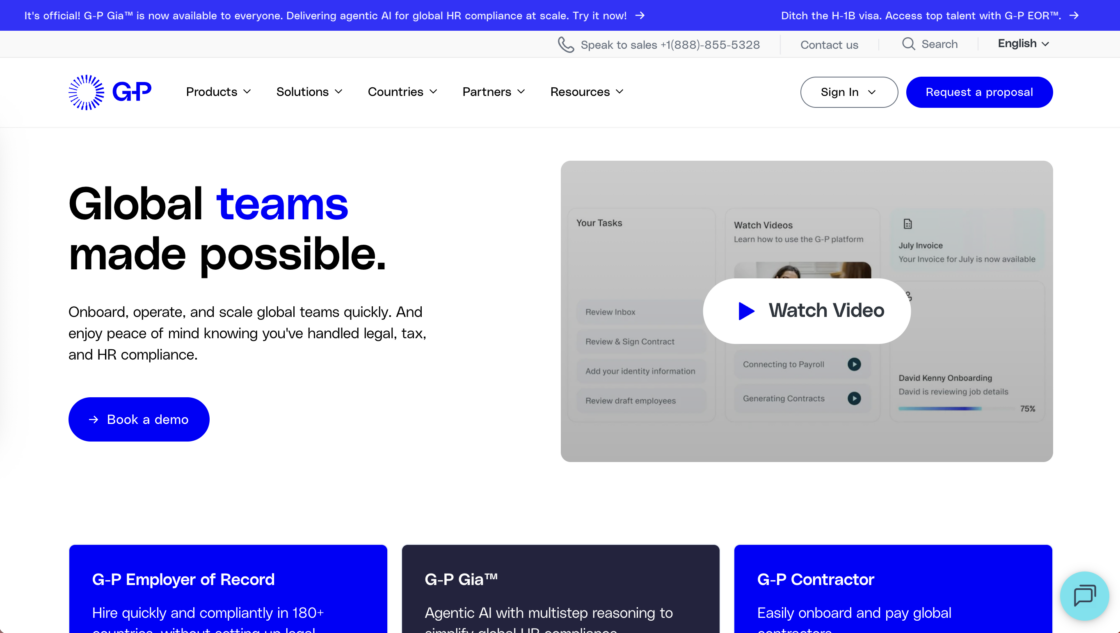
G-P is a well-known EOR provider with a wide international reach and strong compliance features.
Pricing model
- Pricing is customized based on factors like employee salary, number of hires, locations, and services needed.
- EOR services typically start around $599 per employee per month for annual plans.
- Contractor management pricing is around $39 per contractor per month.
- No minimum commitments or hidden fees; however, pricing varies and requires a consultation.
- Pricing includes taxes, benefits administration, and compliance management.
- Pricing tends to be premium compared to some competitors, reflecting strong compliance and support.
Pros vs Deel
- You get one of the most established global EOR networks.
- G-P serves companies of many sizes. Tipalti serves businesses of all sizes, from small businesses to enterprises.
- Its model supports large-scale hiring in multiple countries.
Cons vs Deel
- The platform may feel complex for small teams.
- Deel has strong global coverage through a mix of entities and partners. Deel utilizes a combination of wholly owned entities and local partners to offer comprehensive coverage for EOR services.
- G-P does not offer mass payout tools like some competitors.
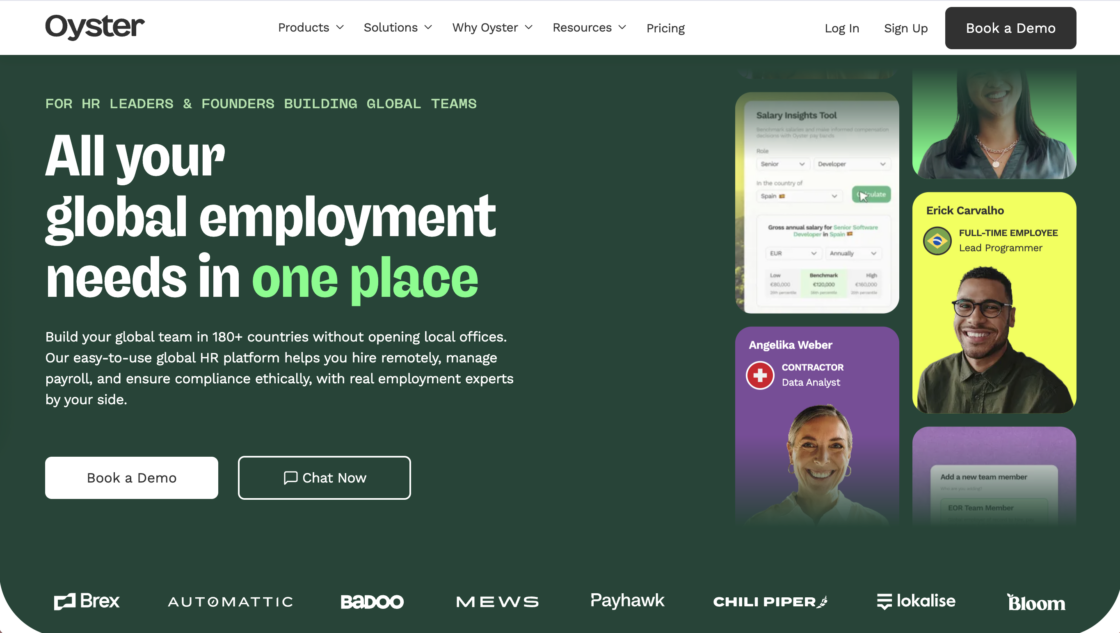
4. Oyster HR
Oyster HR is an employment platform with wide coverage and strong payroll tools.
Pricing model
- EOR starts at $599 per employee per month (annual billing).
- Contractor management starts at $29 per contractor per month.
- Global Payroll plans start at $25 per employee per month.
- Scale plans offer custom pricing with discounts for hiring 3+ employees per year.
- No setup fees or hidden costs.
- Pricing includes payroll, compliance, tax withholdings, and automation for currency conversion.
Pros vs Deel
- You get very broad market coverage. Oyster operates in over 180 countries for payroll processing and compliance.
- Oyster helps you run payroll safely. Oyster supports compliant payroll management across multiple currencies, managing tax withholdings and currency conversions.
- Payroll is automated. Oyster’s global payroll solution automates workflows for timely and accurate payments.
Cons vs Deel
- Support relies on self-service. Oyster emphasizes self-service for customer support with a knowledge base, email, and a forum.
- Onboarding may take time. Oyster onboarding and offboarding typically take one to two days.
- Deel offers strong employee benefits management, which Oyster may not match in all markets.
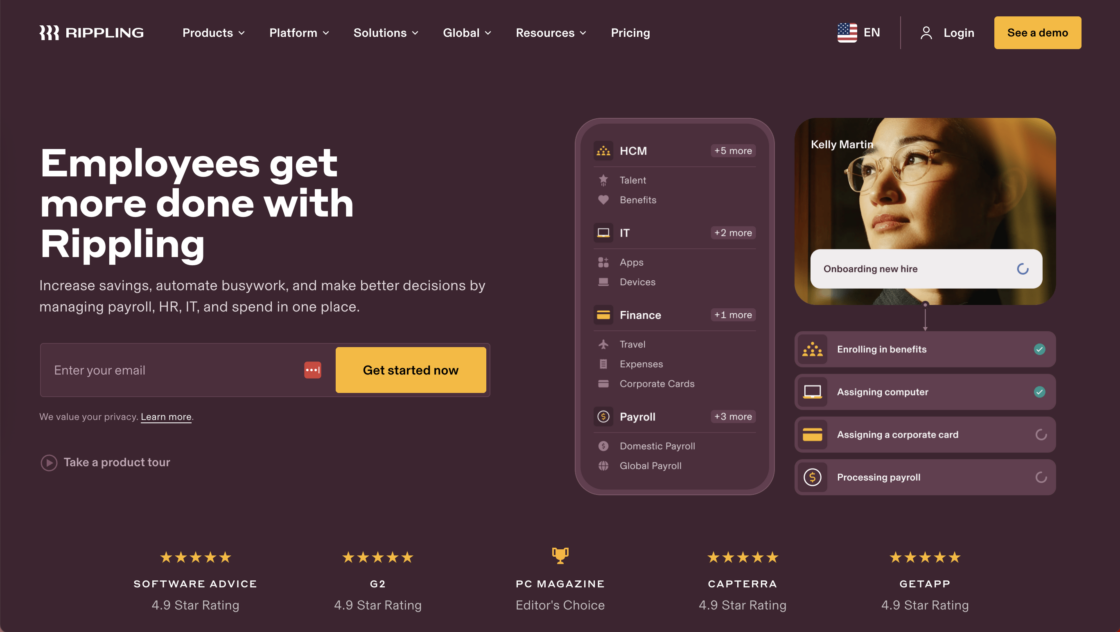
5. Rippling
Rippling combines HR, IT, and finance into a single platform, offering robust automation.
Pricing Model
- Base Platform: $8/user/month.
- Global Payroll: Custom pricing.
- EOR Services: Custom pricing.
- Additional modules are priced separately.
Pros vs Deel
- Payroll is very fast. Rippling allows clients to manage payroll in just 90 seconds.
- You get deep system integrations. Rippling features deep, native integrations across HR, IT, and finance.
- It centralizes many workflows. Rippling is a comprehensive platform that unifies HR, IT, and finance, automating tasks such as onboarding, payroll, and compliance.
Cons vs Deel
- EOR onboarding takes longer. Rippling onboarding takes around four weeks.
- Pricing increases with each module.
- Small teams may find the system too heavy.
Comparison table (Part 2): Deel alternatives
| Provider | Type (EOR / Payroll / Contractors) | Coverage | Pricing | Speed / Onboarding | Key strength | Main weakness |
| Multiplier | EOR + Contractors | 150+ countries | Lower | Same-day | Flexible payments incl. crypto; multi-currency | Weaker analytics; less enterprise depth |
| RemoFirst | EOR + Contractors | Very wide (partner network) | Much lower | Same-day | Cost-effective + fast onboarding | Fewer features; partner model gives less control |
| Papaya Global | Enterprise payroll + EOR | Global | Higher | Standard | Best for large enterprises; strong payroll analytics | Too advanced for SMBs; slower contractor flows |
| Remote | EOR + Payroll + Contractors | 77 EOR / 180 payroll | Higher | 1–2 days | Owned entities + strong compliance | Fewer payout features; higher price |
| Payoneer | Global payouts + HR | 190+ countries | Transaction-based | Fast | Huge global reach + mass payments | Not a full EOR; limited onboarding & compliance |
| Native Teams | EOR + Contractors | 85+ countries | Lower | Standard | Strong compliance + benefits for contractors | Smaller coverage; fewer advanced HR features |
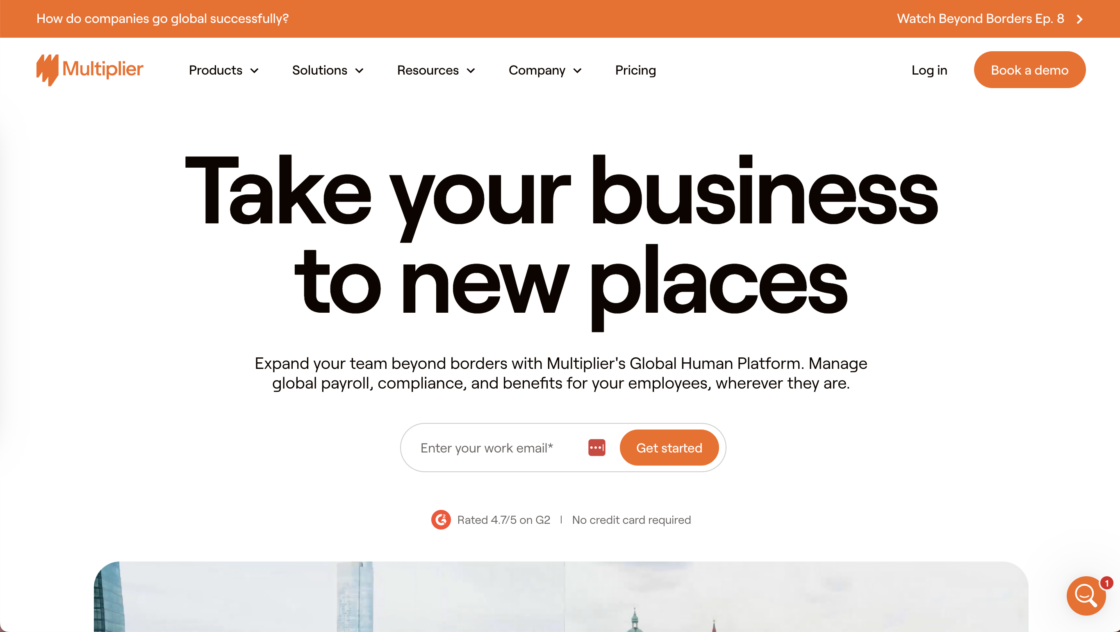
6. Multiplier
Multiplier offers global coverage and strong multi-currency features, including crypto options.
Pricing
- Employer of Record (EOR) services start at around $450 per employee per month.
- Contractor management costs about $29 per contractor per month.
- Pricing varies by region and company size.
- Multiplier supports payment in over 120 currencies, including crypto options.
- Offers flexible payment methods tailored to employees’ preferences.
- Same-day onboarding is available.
Pros vs Deel
- You get very broad reach. Multiplier offers global employment coverage in over 150 countries.
- Payments are flexible. Multiplier allows payment to contractors in over 120 currencies, ensuring compliance with local regulations.
- Fast onboarding. Multiplier provides same-day onboarding services.
- Wide payment methods. Multiplier allows companies to pay employees using their preferred currency and method, from bank transfer to crypto.
Cons vs Deel
- Deel may offer stronger benefits administration.
- Analytics are weaker than Papaya Global.
- The platform may feel limited for enterprise workflows.
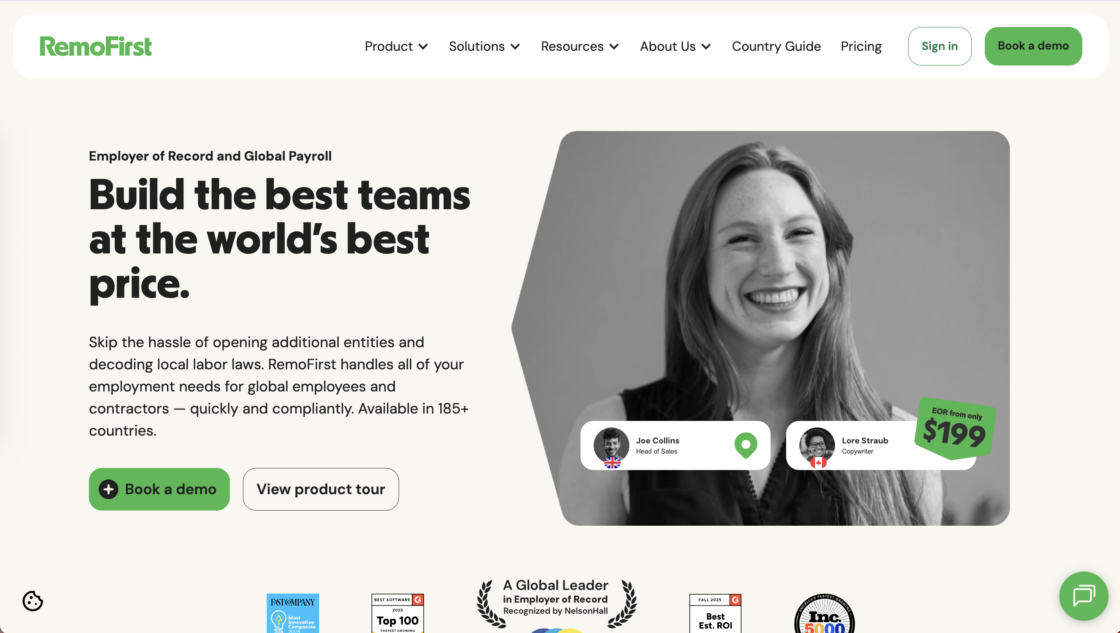
7. RemoFirst
RemoFirst is a cost-effective EOR solution with strong onboarding and global reach.
Pracing information
- EOR services start at $199 per employee per month.
- Contractor management costs $25 per contractor per month.
- No setup, onboarding, or termination fees.
- Transparent, flat-rate pricing with no hidden charges.
- Pricing may vary by country due to local regulations.
Pros vs Deel
- Pricing is very competitive.
- You get fast onboarding. RemoFirst provides quick onboarding, with same-day onboarding and offboarding possible in many cases.
- Very wide coverage. RemoFirst offers global coverage through local partner networks.
- Centralized payroll tools. RemoFirst offers centralized payroll management, allowing access to payslips and automatic monthly payments.
Cons vs Deel
- The partner-based model provides less control than Deel’s mixed entity model.
- Deel may offer stronger benefits and HR modules.
- Reporting features may be more basic.
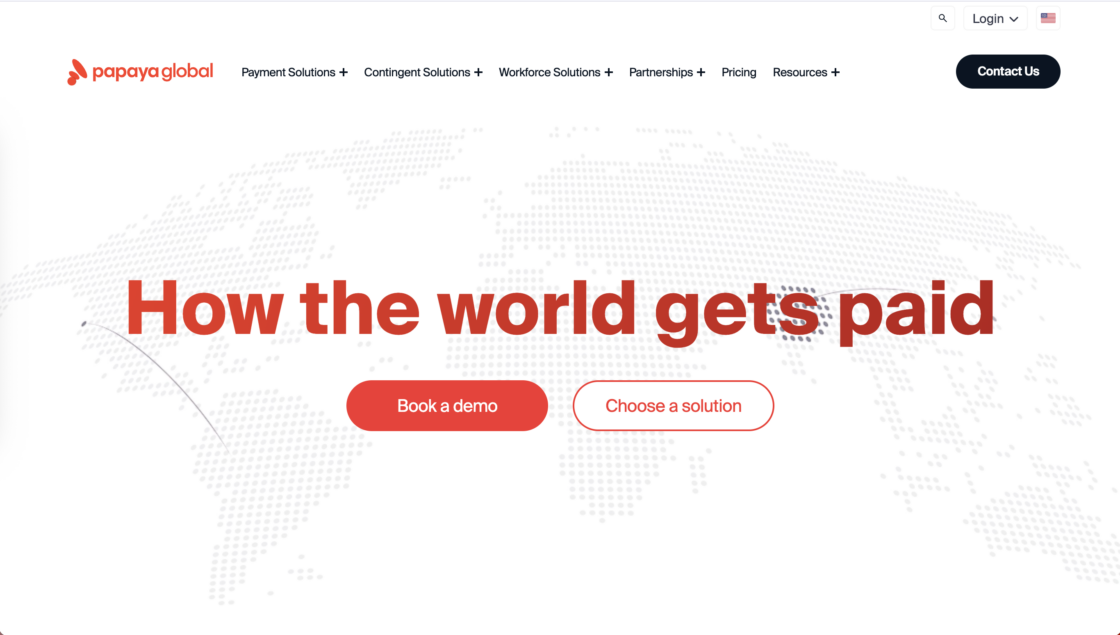
8. Papaya Global
Papaya Global is a payroll-focused provider used mainly by large enterprises.
Pricing information
- Contractor payments: $30/month per contractor.
- EOR services: $650/month per employee.
- Global payroll: Custom enterprise pricing.
- Implementation fees: $2,500-$7,000 typical.
Pros vs Deel
- Ideal for large companies with complex requirements. Papaya Global is primarily targeted towards large enterprises and emphasizes payroll analytics.
- Strong global mass payout support. Tipalti automates global mass payments and compliance.
- Works for multi-subsidiary structures. Tipalti offers an all-in-one platform that supports companies with multiple subsidiaries.
Cons vs Deel
- Deel offers a more competitive entry price. Deel offers a competitive entry price for EOR services compared to Remote and Papaya Global.
- Smaller companies may find Papaya too advanced.
- Contractor flows may feel slower.
9. Remote
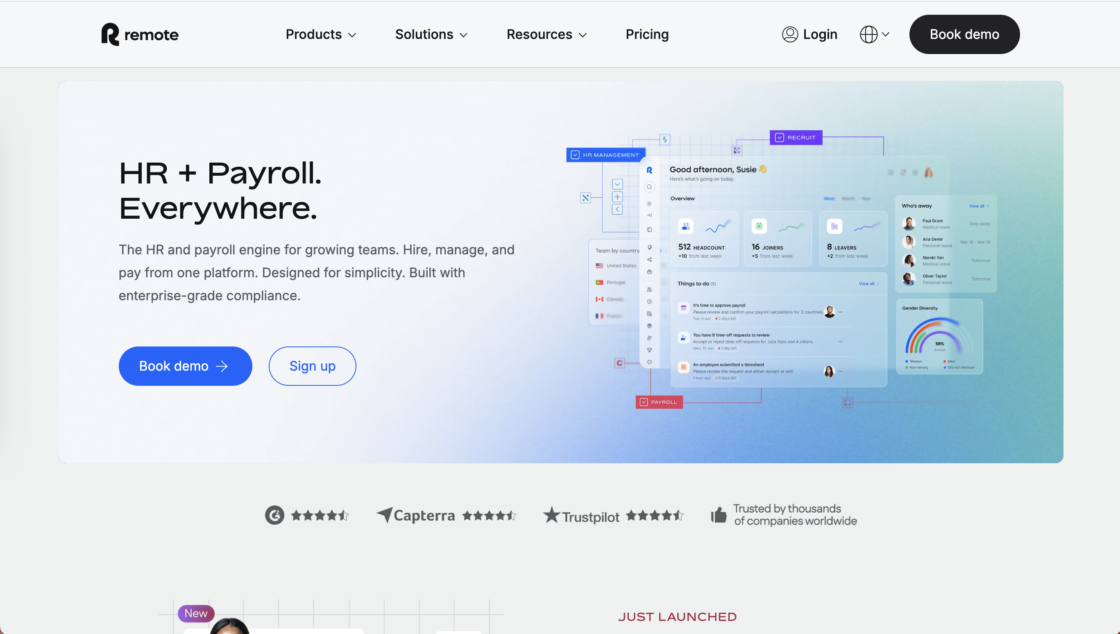
Remote is a global employment provider with strong compliance and owned entities.
Pricing model
- EOR Services: $699/month per employee.
- Contractor Management: $29/month per contractor.
- Global Payroll: Custom pricing.
- No setup fees or hidden charges.
Pros vs Deel
- Strong owned-entity approach. Remote relies mainly on owned entities for tighter control over compliance processes and intellectual property.
- Global reach. Remote offers global employment coverage in 77 countries and international payroll processing in over 180 countries.
- Solid customer support. Remote provides email support, help center, and live chat support.
Cons vs Deel
- Higher pricing.
- Onboarding is slower than same-day competitors. Remote onboarding and offboarding typically take one to two days.
- Fewer payment features than mass-payout platforms.
10. Payoneer
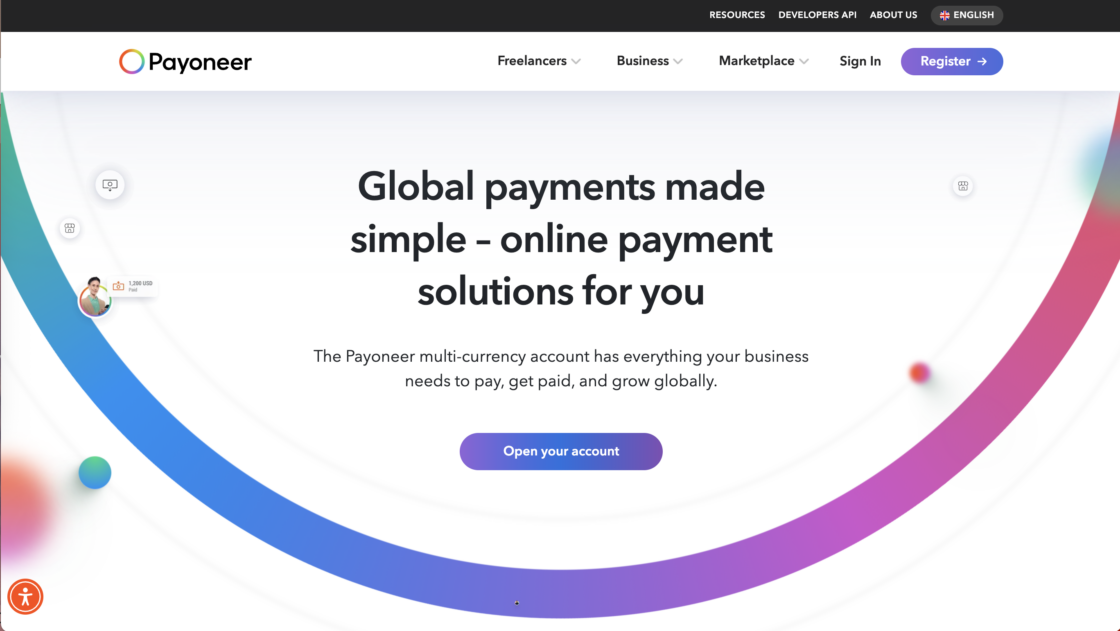
Payoneer is a global payment platform with a vast reach, used for payouts and cross-border work.
Pricing information
- Payoneer charges various fees depending on the transaction type, including a 1% fee for receiving payments (with minimum charges) and withdrawal fees that typically range from 1.5% to 3%, depending on the currency and destination.
- Transfers between Payoneer accounts now incur fees: $4 for amounts below $400 and 1% for amounts above that.
- An annual account fee of $29.95 applies if you receive less than $2,000 per year; active accounts avoid this fee.
- Payoneer applies a 3% markup on currency conversions in addition to the mid-market exchange rate.
- Pricing varies by region, with some countries facing higher transaction fees.
Pros vs Deel
- Very large geographic reach. Payoneer operates in over 190 countries, providing a robust global payment platform for freelancers and businesses.
- Helps manage payments globally. Payment processing can be improved by selecting a platform that automates global payouts.
- Offers global HR solutions. Payoneer offers global HR solutions, including EOR services and employee benefits management.
Cons vs Deel
- Not a complete global employment platform like Deel.
- Limited employee onboarding features.
- Fewer compliance tools than EOR-native providers.
11. Native Teams
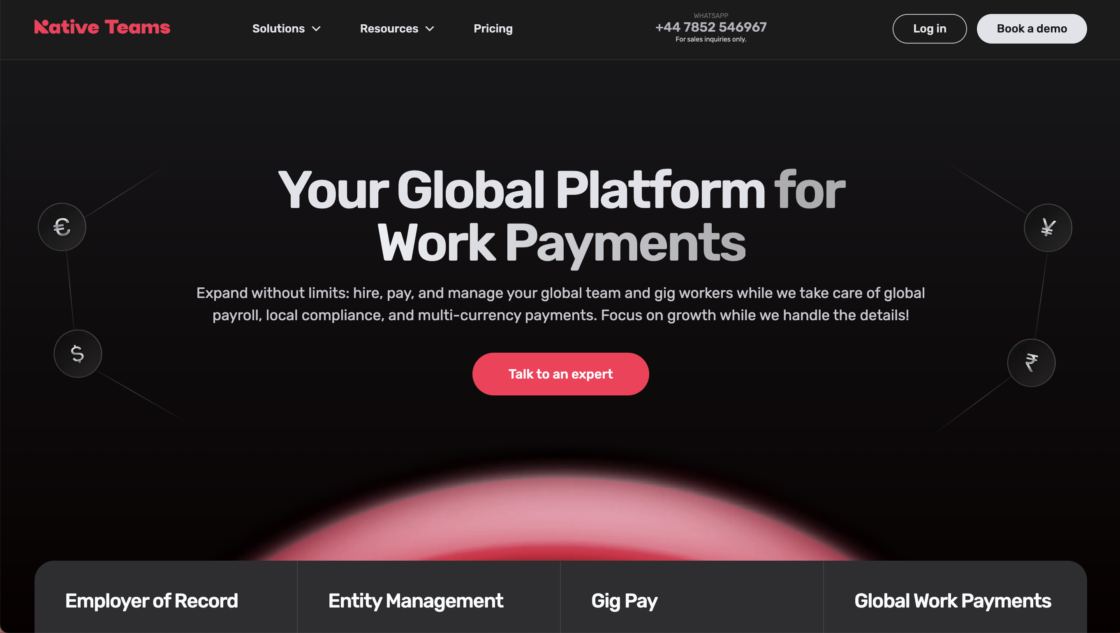
Native Teams supports global work and provides legal employment status for contractors and employees.
Pricing information
- Contractor pay starts at $19-$22 per contractor per month, depending on the plan.
- Employer of Record (EOR) services start at $99-$117 per employee per month, including payroll, compliance, and employee benefits in over 85 countries.
- Gig pay (for high-volume, short-term, or on-demand workers) is custom-priced based on setup and team size.
- Pricing includes access to an admin account, multi-currency payments, automated tax compliance, and 24/7 localized support.
- Direct debit is the standard payment method; opting out may incur a $25 monthly fee per user.
- Early payroll processing is available for $100 per employee per request.
Pros vs Deel
- Broad reach: Native Teams operates in over 85 countries to simplify international expansion.
- Strong compliance support: Native Teams provides a legal employment status and all employment benefits for contractors and employees.
- Good for early global expansion.
Cons vs Deel
- Smaller coverage than Deel’s network.
- Fewer advanced HR features.
- Not ideal for big enterprises needing deep integrations.
FAQs
How does Useme compare to Deel?
Useme and Deel both help companies pay people abroad, but Useme is focused on fast, secure payments for freelancers and contractors. Useme stands out with simple onboarding, clear pricing, and excellent customer service, praised by users. It’s a great choice if you need to pay freelancers for projects without setting up a local entity.
What are the top platforms for international contractor payments and compliance?
Some of the best platforms for paying international freelancers and staying compliant are Useme, Deel, Payoneer, and Remote. Useme is especially strong for project-based work, offering automated contracts, tax documentation, and support for many countries.
How can I move my contractor payments to Useme?
Switching to Useme is easy. You just invite your freelancers to the platform, and Useme handles contracts, invoicing, and payments. The support team helps you with onboarding and makes sure your payments and documents stay compliant.
Do I need a local company to use Useme?
No, you don’t need a local business or entity. With Useme, you can pay freelancers in many countries without opening a local office. The platform manages contracts and payments for you, so you can focus on your projects.

Summary
Deel gives you a wide global employment platform, but it isn’t the best fit for every business. Many companies need simpler tools, faster onboarding, or clearer pricing. Effective alternatives to Deel for managing remote work and payroll include Remote, Oyster HR, Rippling, Papaya Global, G-P (Globalization Partners), and Velocity Global (Pebl), and Useme can be a better match.
Each provider offers different strengths. Some focus on global payroll and EOR services. Others support mass payouts or simple contractor payments. The best choice depends on your team size, your budget, and the type of work you manage.
With the pros and cons listed in this guide, you can choose a platform that supports your global operations without adding extra complexity.