
Thanks to better technology, flexible work policies, and a rise in remote opportunities, this lifestyle is more accessible than ever. But it’s not all beaches and laptops. Being a digital nomad means applying for visas, staying productive in new environments, and planning ahead for life on the move.
So, what do digital nomads do? This guide explores how they adapt to the modern workplace, what skills they need to stay competitive, and how to work with them.
Looking for remote workers and thinking about digital nomads? Go straight to the section for businesses that hire freelancers.
Digital nomads: work without borders
What is a digital nomad? It’s someone who earns a living while traveling from place to place. Their “office” could be a coworking hub in Lisbon, a mountain lodge in Colorado, or a cafe in Bangkok – as long as there’s reliable internet, they can get to work.
Instead of being tied to a single location, digital nomads choose where they live and work based on lifestyle, cost of living, or simple curiosity about a new place. Some move every few weeks, while others stay in one city for months before moving on. This location-independent lifestyle allows them to explore the world while growing their careers.
Examples of digital nomads
The lifestyle isn’t limited to one type of career or traveler. Let’s go through common examples of a digital nomad:
- Remote employees: These are people who work full-time for a company but are allowed to do their job entirely online. They might live in different cities or countries throughout the year while keeping the same employer.
- Freelancers: Professionals who take on short-term projects or gigs for multiple clients. This could include writers, designers, developers, or consultants.
- Entrepreneur nomads: Business owners who run their company online, such as an e-commerce store, digital agency, or online course platform.
- Pandemic-era nomads: Workers who discovered remote work during lockdowns and decided to keep traveling while working.
- Nomadic families: Parents working remotely while traveling with children, often homeschooling or enrolling them in virtual classrooms.
What remote work model would work for you? No matter where you live, you can invoice your clients with Useme.
Common digital nomad jobs
What do digital nomads do in practice? Let’s go through digital nomad jobs that come in many shapes and sizes. The best jobs offer complete location independence, rely primarily on a laptop and internet, and can be done across time zones. Here’s a breakdown by category, with examples that fit the nomadic lifestyle.
Creative & content careers
These roles combine artistic skills with flexibility, often allowing for asynchronous work and self-directed schedules.
- Content writer / freelance writer: Create blog posts, marketing copy, or e-books. Freelance writing is one of the most popular ways to start for aspiring digital nomads.
- Travel blogger / content creator: Share travel tips, stories, and photography, monetizing through ads or sponsorships. Creative digital nomads often start here.
- Graphic designer: Design branding, social media graphics, or marketing materials using tools like Adobe Creative Suite or Canva. Graphic design offers excellent location independence.
- Photographer / videographer: Capture visuals on location, then edit and deliver them remotely.
Technical & development roles
These jobs are perfect for problem-solvers who enjoy working with software, websites, and data. They are in high demand and generally offer strong possible income. If you’re a tech nomad, you may gravitate toward these careers.
- Web developer / web designer: Build and maintain websites from anywhere using version control tools like GitHub. Web development is ideal for those who want to work remotely.
- Software engineer / app developer: Develop software or mobile apps with collaborative tools like Jira and Slack.
- SEO specialist / online marketing specialist: Help businesses rank higher in search engines and grow their online reach. Digital marketing skills are increasingly valuable for nomads.
- Data analyst: Interpret datasets and deliver insights using tools like SQL, Python, or Excel.
Education & language-based jobs
These careers are excellent for those who enjoy helping others learn and can be done through video calls and online platforms.
- Online tutor: Teach academic subjects via platforms like Preply or VIPKid.
- Language teacher: Offer language lessons to students around the world.
- Translator: Convert written text from one language to another.
Business support & services
If you have organizational skills or customer service experience, these roles can help you move quickly into the digital nomad lifestyle.
- Virtual assistant (VA): Manage email, scheduling, research, and admin tasks for clients.
- Customer service representative: Handle calls, chats, or email support remotely with a headset and good internet.
- Accountant / bookkeeper: Manage finances for businesses using cloud accounting software.
- Project or product manager: Oversee tasks and teams through tools like Trello or Asana.
Entrepreneurship & e-commerce
These are for people who work independently and want to build and run their own ventures while traveling.
- E-commerce entrepreneur: Sell products through Shopify, Etsy, or Amazon, using dropshipping or print-on-demand to avoid handling inventory.
Digital nomad life: what do digital nomads do
While every digital nomad’s schedule is different, most days combine focused work with the freedom to explore. Mornings often start with checking emails, reviewing tasks, and setting up in a reliable workspace, like a coworking space, cafe, or quiet rental. Remote workers might sync with their teams early, while freelancers often use this time for deep, uninterrupted work.
Many digital nomads structure their days around their own schedule, taking advantage of flexible hours to maximize productivity. Midday is a mix of meetings, client calls, and project work. Some nomads take a break to sample local food or run errands, while others power through and wrap up tasks early. Afternoons can mean delivering final work, handling admin tasks like invoices, or diving into creative projects.
Evenings are flexible – time to explore the city, connect with other digital nomads, or log back in for clients in different time zones. The common thread? Blending productivity with mobility, making each day both structured and full of possibility. This flexibility is what makes digital nomad life so appealing to self-employed workers seeking a better work-life balance.
Key skills for digital nomad success
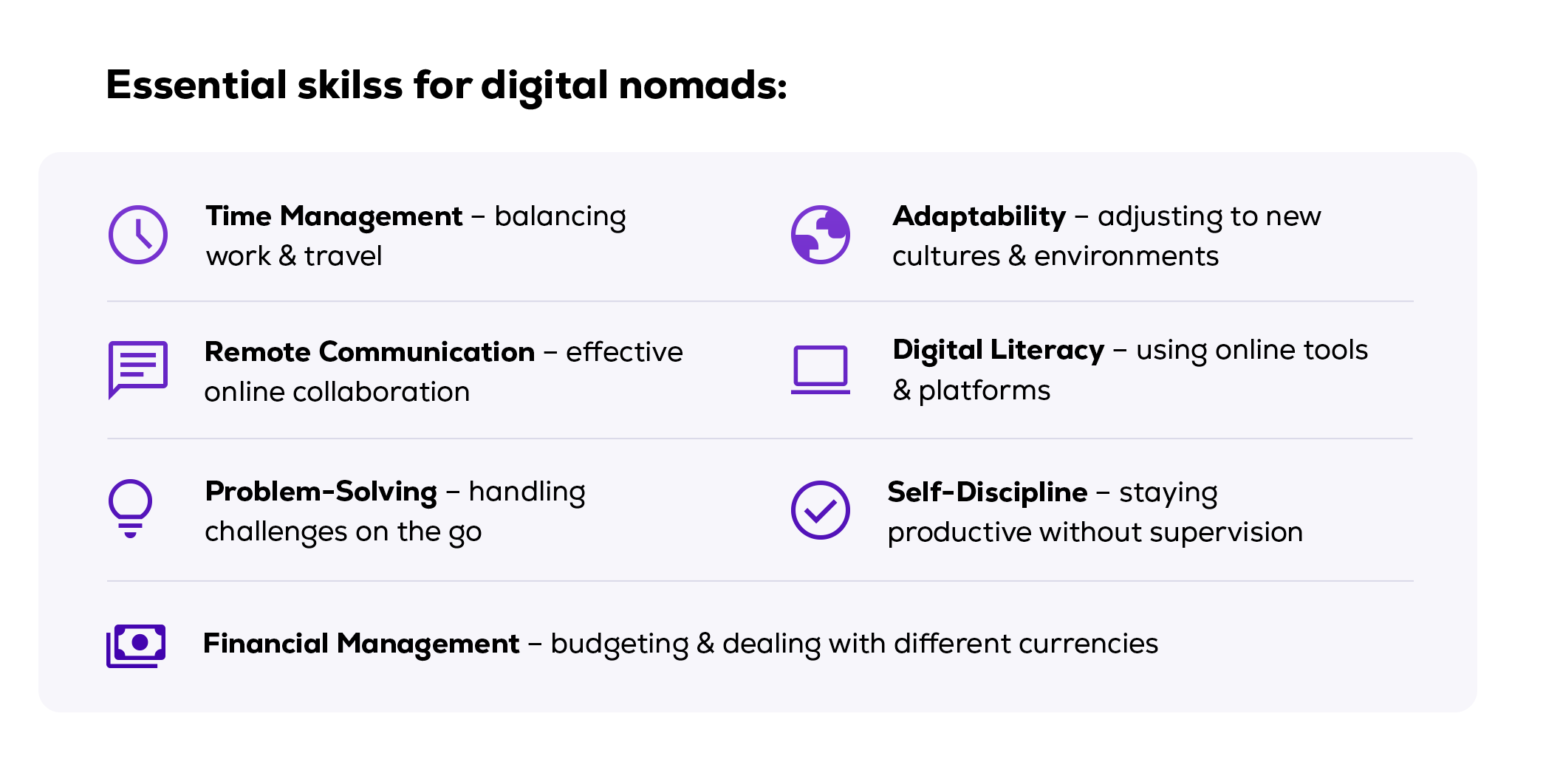
While job titles and routines vary, successful digital nomads share certain abilities that help them work effectively from anywhere. These skills make it easier to manage deadlines, travel plans, and life in unfamiliar places. You need them to become a digital nomad.
Strong organization
A digital nomad often manages work tasks, client communication, travel bookings, and personal expenses all at once. Strong organization means:
- tracking deadlines across different time zones;
- planning travel routes and accommodation ahead of time;
- keeping important documents in secure, easy-to-access formats.
Clear communication
Without face-to-face contact, remote work relies on effective written and verbal communication. This includes:
- using email, messaging apps, and video calls to stay connected with clients or employers;
- setting clear expectations for availability and response times;
- asking questions early to avoid misunderstandings.
Adaptability
Plans change – flights get canceled, internet speeds fluctuate, and work hours may shift to match a client’s time zone. Being adaptable means:
- adjusting quickly to new environments and cultural norms in any foreign country;
- finding alternative workspaces if Wi-Fi is unreliable;
- staying calm when schedules or priorities shift unexpectedly.
Self-motivation
With no manager watching over your shoulder, your productivity depends on your own discipline. Self-discipline will help you stay productive while surrounded by distractions. Self-motivated digital nomads:
- set realistic goals for each day or week;
- avoid distractions from sightseeing or social events until work is complete;
- maintain routines that support focus and consistency.
Problem-solving skills
Unexpected issues are part of the lifestyle. Successful nomads know how to:
- think creatively to overcome obstacles;
- research solutions quickly using online resources and local contacts;
- find solutions when support systems are far away.
Pros and cons of the digital nomad lifestyle
Having the skills to do the job right is one thing, but like any way of working, being a digital nomad comes with both upsides and challenges. Here’s what to expect:
Benefits of the digital nomad lifestyle
- Freedom to choose your workspace. Whether it’s a beach in Mexico or a coworking space in Berlin, you decide.
- Flexible schedule. Work early in the morning, late at night, or somewhere in between.
- Travel and cultural experiences. Live in new places, learn languages, and meet people from around the world.
- Potential cost savings. Some destinations have a much lower cost of living compared to the U.S. Costa Rica and Southeast Asia are popular for their low cost.
- Personal growth. Living in a new environment builds problem-solving skills and adaptability.
Cons of the digital nomad lifestyle
- Travel costs add up. Flights, accommodations, and visas can be expensive, especially with constant travel.
- Time zone juggling. Coordinating with clients or teams across the globe can disrupt your routine.
- Isolation. Being away from friends and family for long periods can get lonely.
- Work-life balance struggles. Beautiful surroundings can distract from deadlines, and work can spill into personal time.
- Extra paperwork problems: Dealing with visas, taxes, and local regulations requires extra effort, especially when traveling abroad.
Planning for success as a digital nomad
Succeeding as a digital nomad isn’t just about packing your laptop and booking a flight. It requires careful preparation. Plan that in advance to save yourself headaches later and ensure your journey is both productive and fulfilling.
Choose the right destination
Selecting your destination is about choosing between what you want and what works.
- Legal requirements. Check that you’re legally allowed to work there. This means ensuring your passport is valid and understanding visa options (tourist visas, work visas, or specialized digital nomad visas). Countries like Estonia launched new digital nomad visa programs for digital nomads.
- Safety considerations: Be aware of risks tied to your identity, whether that’s gender, ethnicity, religion, or sexual orientation.
- Lifestyle fit: Consider language, cuisine, activities, climate, and whether you want to join a nomad community. Learning the local language can enhance your experience in any particular place.
Popular destinations include major cities in Western Europe for their infrastructure and nomad communities, though many nomads prefer destinations where they can live comfortably on less money.
💡 Check out our article on the best countries for digital nomads, and start your digital nomad career today!
Top companies that hire remotely – where to look and how to get hired
Can you work remotely from another country? What you need to know
Secure employer or client approval
If you’re a remote employee, you’ll need to explain why working from another country is a good idea. Prepare a detailed plan covering work schedules and communication methods, and check your work results. If you’re a freelancer, be upfront with clients about your travel plans and how you’ll manage time zone differences and communication.
Plan for logistics and daily operations
Handle the practical details that can make or break your experience.
- Workspace: Make sure you’ll have a reliable internet connection and a quiet space for meetings. Research coworking spaces or private offices in advance.
- Connectivity: Test accommodation Wi-Fi, identify backup locations like cafés or libraries, and set up a VPN for security.
- Financial readiness: Talk to your bank about travel notifications, set up backup payment options, and keep emergency cash on hand.
- Health care: Consider whether you need international health insurance or specialized coverage, especially if you plan to stay in one location for at least one year.
⚠️ Important: Some nomads may need to get a residency permit, depending on the length of their stay and the country’s regulations.
Build and maintain community
Loneliness can be a hidden challenge of nomad life. Join actively coworking space activities to build connections with fellow nomads and locals.
How to become a digital nomad: getting started
For those wondering how to become a digital nomad, the journey typically begins with securing a remote job or building freelance income. Start by developing skills that are in demand for remote work – whether that’s freelance writing, web development, graphic design, or digital marketing.
💡 Start your remote career with Useme. Apply for your first remote job.
Entry-level positions in customer service, virtual assistance, or content writing can be stepping stones to more specialized roles. The key is proving you can work remotely effectively before taking your career on the road.
Many successful nomads recommend creating content about your journey, as this can lead to additional income streams and help you connect with the nomad community. Whether you’re documenting your experiences or sharing professional insights, creating content adds value to your nomad journey.
💡Read more on how to become a digital nomad & start your remote journey today.
How to hire and work with digital nomads
And what about the businesses looking to tap into the growing pool of location-independent talent? Well, working with digital nomads offers access to skilled professionals who bring unique perspectives and often work across multiple time zones. Here’s how to get started.
Finding digital nomad talent
Digital nomads are active on platforms designed for remote work and freelance opportunities. Look for talent on:
- Platforms like Useme, with a quality pool of freelance specialists
- Coworking spaces and nomad community platforms
- Professional networks like LinkedIn, specifically targeting remote workers
- Industry-specific communities and forums
<Find your next contractor with Useme. Explore the talent pool of hundreds of experts & settle deals securely. | Button -> Check out>
Setting clear expectations
When hiring digital nomads, clear communication is the key:
- Define work hours – be clear about when you need them available, considering time zone differences.
- Establish communication rules – specify tools you like best (Slack, email, video calls) and response times.
- Set project deadlines – include potential travel days or internet connection issues.
- Clarify payment terms – many nomads prefer secure, international-friendly payment methods.
💡Check 8 most popular freelancer payment methods.
- Document everything – written agreements protect both parties and clarify expectations upfront.
Legal and compliance considerations
Before hiring nomadic talent, understand the key legal requirements:
- Worker classification – determine whether you need employees or independent contractors. Misclassifying workers can lead to penalties and legal issues.
- Tax obligations – know where taxes need to be paid. Generally, contractors handle their own taxes, while employees require proper tax withholding based on their location. You can learn more about tax obligations in Hiring international employees: legal, tax, and global payroll tips for U.S. companies.
- Work authorization – always check if your nomadic workers have proper digital nomad visas or work permits for their chosen destinations.
- Employment law compliance – different countries have varying rules about minimum wage, working hours, and employee protections.
- Contracts – include intellectual property clauses (rules about who owns the work, such as photos, content, and lines of code), confidentiality agreements, and termination procedures.
Managing remote collaboration
You can manage a remote team of digital nomads effectively by using project management tools like Trello, Asana, or Monday.com to track progress no matter where your team is. Focus on outcomes instead of hours worked, judging performance by finished work rather than time spent online.
Build in flexibility, keeping in mind that the nomadic lifestyle may sometimes affect availability. Plan ahead for connectivity issues by having backup communication methods ready for when internet connections are unstable. Finally, take advantage of their unique perspective – many digital nomads bring diverse knowledge about cultures and language skills that can benefit your business.
Summary of digital nomadism
The digital nomad lifestyle offers the freedom to work from anywhere while exploring the world, but success comes from preparation, adaptability, and the right mindset. From choosing the perfect destination and securing visas to developing key skills and finding the right remote-friendly job, this guide has covered the essentials for doing well while traveling.
Because, let’s be honest – digital nomadism represents a big change in how we think about work and life. Whether you’re a remote employee, a freelance writer, or an entrepreneur, your journey can be as structured or spontaneous as you make it. The lifestyle where you can live anywhere continues to grow as more companies accept remote work, and technology makes it easier to keep professional relationships from anywhere.